


SKU #61040
·
34 views
1007-1
Sugar Beet
User rating
0 votes0% positive reviews
No ratings yet — be the first.
Ploidy Type
Diploid
Root vegetable; size
Medium
Root; shape
Narrow-conical
Sugar Content
18-19%
About product

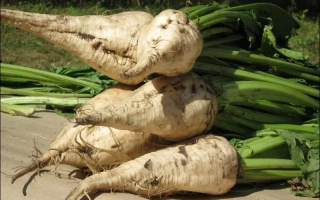
A diploid hybrid featuring high sugar content and a specialized root shape for smooth mechanized harvesting.
Ploidy Type
Diploid
Root vegetable; size
Medium
Root; shape
Narrow-conical
Sugar Content
18-19%
Description
Stability and Sugar Content in Challenging Climates
The 1007-1 hybrid is a diploid sugar beet variety specifically bred to deliver a consistent yield with a high sugar extraction rate. In modern sugar beet farming, where humidity fluctuations and temperature stress are constant challenges, opting for a diploid hybrid is a strategic choice due to their inherent adaptability. The core strength of 1007-1 lies in its ability to maintain a sugar content of 18–19% even under less-than-ideal agronomic conditions.
Strategic Root Shape
The narrow-conical shape of the root is a major advantage of this hybrid. This geometry significantly simplifies the mechanized harvesting process, minimizing losses during extraction and ensuring the beets are harvested clean with minimal damage. Its medium size allows for optimal plant density, ensuring that the field is utilized efficiently for maximum output per hectare.
Why choose the 1007-1 hybrid?
- Efficient Harvesting: The specific root shape reduces soil adhesion, making the post-harvest cleaning process more cost-effective.
- Quality Output: Consistently high sugar levels make this hybrid a preferred choice for processing plants.
- Reliability: As a diploid hybrid, it offers superior performance stability compared to more sensitive varieties.
This hybrid performs best in operations that prioritize precise mineral nutrition and standard density management. While it is highly capable, growers must pay attention to seeding rates to avoid overcrowding. For farmers looking to balance yield volume with high-quality chemical composition, 1007-1 serves as a highly reliable tool for optimizing production profitability.
Crop & resistance
Crop
Specifications hover over for a hint about the specification
| Ploidy Type | |
|---|---|
| Root vegetable; size | |
|
Root; shape
Root; shape
Roots can be round, elongated-round, cylindrical, conical. |
|
| Sugar Content | 18-19% |
| Registration year | 2005 |
| Catalog | Catalog → Sugar Beet |
| Legal data |
Show · 10
|
| Country | Russia |
Store offers
Prices are updated on loadLoading offers…
Aggregator catalog: prices are collected automatically from store websites, normalized by AI and converted at the current exchange rate. Before ordering, confirm the price and availability on the store's website. This block is not indexed by search engines — the data is loaded after the page opens.
Not yet комментариев. Be the first!
Alternatives
Sugar beet seeds · similar varieties






See also
Often considered together with this variety






Recently viewed
Products you’ve viewed on this site
Reviews · 0