


SKU #60882
·
36 views
Rhino
Sugar Beet
SESVANDERHAVE NV/SAUser rating
0 votes0% positive reviews
No ratings yet — be the first.
Root vegetable; size
Medium
Root; shape
Cylindrical-conical
Sugar Content
18-19%
Registration year
2016
About product

A high-performance hybrid with strong resistance to foliage diseases and root rot.
Root vegetable; size
Medium
Root; shape
Cylindrical-conical
Sugar Content
18-19%
Registration year
2016
Description
Yield Stability Under High Disease Pressure
Sugar beet 'Rino' from the Belgian breeder Sesvanderhave Nv/Sa is the preferred choice for farms operating under challenging environmental conditions. The primary strength of this hybrid is not just its sugar content, but its ability to pair high output with robust defenses against a complex of diseases typical for intensive farming.
Health as the Basis for Profitability
The main challenge in sugar beet production is maintaining leaf surface health until harvest. 'Rino' demonstrates exceptional tolerance to foliage diseases. Unlike many other hybrids sensitive to pathogens, 'Rino' consistently withstands:
- Cercospora leaf spot, which often causes significant yield loss during hot, humid periods.
- Powdery mildew, which inhibits healthy photosynthesis.
- Root rots, which threaten the crop’s integrity during the ripening phase.
Such comprehensive resistance allows agronomists to optimize fungicide programs and prevent outbreaks in situations where diseases spread rapidly.
Agronomic Profile and Root Characteristics
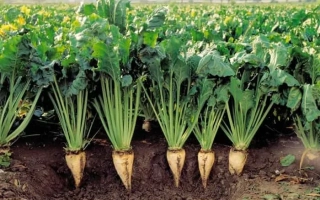
The 'Rino' hybrid produces medium-sized roots with a cylindrical-conical shape. This morphology is ideal for mechanized harvesting, ensuring minimal field losses. With a sugar content in the range of 18–19%, this hybrid provides an attractive economic profile for sugar refineries by ensuring a reliable yield of finished product per hectare.
This hybrid is ideal for producers who value predictability. If your fields are prone to soil-borne pathogen accumulation or if your regional climate encourages the development of foliage infections, 'Rino' serves as a stable, reliable tool to minimize risks to both quality and volume.
Crop & resistance
Crop
Disease resistance
Specifications hover over for a hint about the specification
| Root vegetable; size | |
|---|---|
|
Root; shape
Root; shape
Roots can be round, elongated-round, cylindrical, conical. |
|
| Sugar Content | 18-19% |
| Registration year | 2016 |
| Catalog | Catalog → Sugar Beet |
| Manufacturer | SESVANDERHAVE NV/SA |
| Legal data |
Show · 6
|
| Country | Belgium |
Store offers
Prices are updated on loadLoading offers…
Aggregator catalog: prices are collected automatically from store websites, normalized by AI and converted at the current exchange rate. Before ordering, confirm the price and availability on the store's website. This block is not indexed by search engines — the data is loaded after the page opens.
Not yet комментариев. Be the first!
Alternatives
Sugar beet seeds · similar varieties




See also
Often considered together with this variety




Recently viewed
Products you’ve viewed on this site
Reviews · 0