


SKU #43545
·
45 views
VARELA
Sugar Beet
STRUBEUser rating
0 votes0% positive reviews
No ratings yet — be the first.
Direction Type
Normal-sugar type (NZ)
Root vegetable; size
Medium
Root; shape
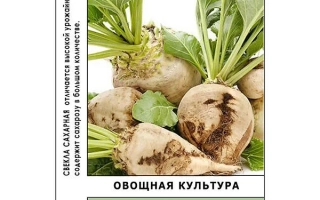
Cylindrical-conical
Registration year
2013
About product

A reliable NZ-type sugar beet hybrid with strong resistance to rots and diseases for consistent yields.
Direction Type
Normal-sugar type (NZ)
Root vegetable; size
Medium
Root; shape
Cylindrical-conical
Registration year
2013
Description
Stable yields in risky environments: The potential of Strube Varela
Sugar beet «Varela» from the German breeding house Strube is a top choice for agronomists who prioritize reliability and predictable results. As a normal-sugar (NZ-type) hybrid, it demonstrates excellent plasticity, making it an optimal solution for farms aiming to balance high root yields with a consistent sugar content.
Agronomic profile and protection
The key advantage of Varela lies in its biological robustness. In high-humidity conditions or intensive crop rotations where soil-borne pathogens pose a significant threat, this hybrid effectively resists root rot complexes. This reduces the need for additional fungicide treatments during early growth stages and maintains plant population density right up to harvest.
- Phytosanitary reliability: The hybrid shows solid resistance to Cercospora leaf spot and powdery mildew, which is crucial in regions with hot and humid summers.
- Harvesting efficiency: The medium-sized, cylindrical-conical root shape ensures minimal losses during mechanical harvesting. The roots are easily lifted from the soil, reducing dirt tare and ensuring cleaner loads during logistics.
Operational scenarios
Varela is recommended for planting in regions with moderate infection pressure, where a high-energy hybrid is needed. Thanks to its balanced sugar content, it delivers stable processing parameters at sugar refineries, preventing issues with purification efficiency. Agronomists often choose Varela for fields where uniform root size is essential to facilitate the operation of sugar beet harvesters and minimize raw material damage. The hybrid effectively shades the rows, suppressing weed growth through rapid leaf development, making it a dependable "workhorse" for large-scale operations.
Crop & resistance
Crop
Disease resistance
Specifications hover over for a hint about the specification
| Direction Type | |
|---|---|
| Root vegetable; size | |
|
Root; shape
Root; shape
Roots can be round, elongated-round, cylindrical, conical. |
|
| Registration year | 2013 |
| Catalog | Catalog → Sugar Beet |
| Manufacturer | STRUBE |
| Country | Germany |
Store offers
Prices are updated on loadLoading offers…
Aggregator catalog: prices are collected automatically from store websites, normalized by AI and converted at the current exchange rate. Before ordering, confirm the price and availability on the store's website. This block is not indexed by search engines — the data is loaded after the page opens.
Not yet комментариев. Be the first!
Alternatives
Sugar beet seeds · similar varieties


See also
Often considered together with this variety




Recently viewed
Products you’ve viewed on this site
Reviews · 0