


SKU #71799
·
71 views
Sudan grass GUSEVSKAYA
Sudan Grass
Prices in stores
No offers yet — stores have not added prices for this product yet.
Similar varieties with prices
-
UdachaRosNIIPITI SK / Saratovskiy GUBI
from 1.95 €per 1 kg
-
 Alexandrina
from 1.95 €per 1 kg
Alexandrina
from 1.95 €per 1 kg
-
 Volga
from 1.66 €per 1 kg
Volga
from 1.66 €per 1 kg
-
 Sorghum
from 1.66 €per 1 kg
Sorghum
from 1.66 €per 1 kg
Vegetation Period
120
Usage
Feed Crop
Plant Height
250
Green Mass Yield (t/ha)
100
Your mark
0 votes
0% positive ratings
About product
High-yield Sudan grass with up to 5 cuts per season and strong resistance to bacteriosis.
Description
Technical Profile and Productivity of "Gusevskaya"
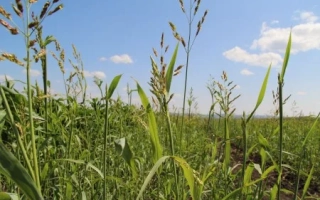
The "Gusevskaya" Sudan grass variety is a specialized selection designed for high-efficiency conversion of soil nutrients into mass forage. Bred by the farming enterprise (KFH) V.A. Obiedkov, the variety is optimized for high metabolic activity. With a total growth cycle of 120 days, the plant reaches the first cut stage in just 65–70 days post-emergence, facilitating efficient land management.
Agronomic Metrics
- Plant Height: up to 250 cm, ensuring significant biomass yield.
- Yield Potential: up to 100 t/ha of green mass and 9 t/ha of dry hay, depending on agronomic practices.
- Regeneration Rate: the variety supports 2–5 cuts per season, providing excellent flexibility for harvest planning.
Phytosanitary Resilience and Technical Value
A major technical advantage of "Gusevskaya" is its genetic resistance to bacteriosis. This specific trait serves as a critical buffer against crop loss in high-humidity environments where pathogens typically thrive. By neutralizing the threat of bacterial infection, the variety ensures consistent quality of forage and protects the economic investment in the crop.
For intensive livestock operations, "Gusevskaya" provides a reliable and predictable forage supply. Its robust stalk anatomy and fast regrowth cycle make it a highly efficient solution for farmers looking to maximize output per hectare throughout the growing season.
Crop & resistance
Crop
Disease resistance
Specifications
| Vegetation Period | 120 |
|---|---|
| Usage | |
| Plant Height | 250 |
| Green Mass Yield (t/ha) | 100 |
| Hay Yield (t/ha) | 9 |
| Number of cuts per season | 2-5 |
| Period from emergence to the first cut (days) | 65-70 |
| Registration year | 2024 |
| Catalog | Catalog → Sudan Grass |
| Legal data |
Show · 1
|
| Country | Russia |
No reviews yet. Be the first to share your experience.
Alternatives
Sudan Grass · similar varieties





See also
Often considered together with this variety




Recently viewed
Products you’ve viewed on this site
Reviews