

SKU #71818
·
64 views
Sorghum
Sudan Grass
User rating
0 votes0% positive reviews
No ratings yet — be the first.
Plant Height
150–250
Green Mass Yield (t/ha)
35–45, 45–55
Hay Yield (t/ha)
8–10
Number of cuts per season
2, 3, 4
Prices in stores
from1.12 €per 1 kg
pack from 16.58 € per 10 kg
2 offers from 2 stores
Store offers · 2 from 2 stores
Prices are updated on loadLoading offers…
Available at: Агроексперт-Трейд · AgroSemka
Aggregator catalog: prices are collected automatically from store websites, normalized by AI and converted at the current exchange rate. Before ordering, confirm the price and availability on the store's website. This block is not indexed by search engines — the data is loaded after the page opens.
About product

A high-yielding Sudan grass variety offering up to 4 cuts per season and consistent protein levels.
Plant Height
150–250
Green Mass Yield (t/ha)
35–45, 45–55
Hay Yield (t/ha)
8–10
Number of cuts per season
2, 3, 4
Description
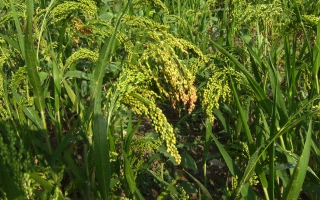
Sudan Grass Smena: Robust Forage Productivity
The 'Smena' variety, developed by the Ufa Federal Research Center of the Russian Academy of Sciences, represents a cornerstone in forage crop selection. Designed for regions that experience significant temperature fluctuations and dry summers, this variety has gained a reputation for its reliability and high nutritional output. By focusing on resistance to bacterial diseases, breeders have created a resilient crop that maintains quality throughout the growing season.
Growth Characteristics and Yield
Smena is characterized by vigorous growth, reaching heights of 150–250 cm. Its capacity for rapid recovery after cutting makes it an excellent choice for intensive management systems. Farmers can expect a green mass yield of 35–55 tons per hectare, depending on local soil conditions and moisture availability. When harvested for hay, the yield ranges between 8 and 10 tons per hectare, with a dry matter protein content of 10–12%, ensuring a high-quality nutritional base for livestock.
Operational Versatility
The primary advantage of Smena is its flexibility in utilization. The variety supports a multi-cut system, allowing for 2 to 4 harvests per season. This makes it an ideal component for a continuous green forage chain. Its high resistance to bacteriosis ensures that even in humid conditions or late-season cuts, the crop remains healthy and productive.
- Variety type: Sudan Grass.
- Originator: Ufa Federal Research Center (RAS).
- Usage: Green fodder and hay production.
- Key Strength: High resistance to bacteriosis and excellent regrowth rate.
Crop & resistance
Crop
Disease resistance
Specifications
| Plant Height | 150–250 |
|---|---|
| Green Mass Yield (t/ha) | 35–45, 45–55 |
| Hay Yield (t/ha) | 8–10 |
| Number of cuts per season | 2, 3, 4 |
| Protein content in dry matter (%) | 10–12 |
| Usage | |
| Registration year | 2015 |
| Catalog | Catalog → Sudan Grass |
| Legal data |
Show · 2
|
| Country | Russia |
Not yet комментариев. Be the first!
Alternatives
Sudan Grass · similar varieties





See also
Often considered together with this variety




Recently viewed
Products you’ve viewed on this site
Reviews · 0