


SKU #71901
·
66 views
SNYEGYETY
Lupin
User rating
0 votes0% positive reviews
No ratings yet — be the first.
Usage
On green feed
Registration year
2002
About product

Variety "SNYEGYETY" – narrow-leaved lupine (Lupinus angustifolius L.), early maturing with a growing season of 90 to 118 days, which allows for quick cutting of the plant and obtaining a harvest within a short season. The plant is erect, indeterminate, with a height of usually 50–70 cm, light green leaves, and terminal leaflets that are narrow and of medium length. Flowers are white with a yellowi…
Usage
On green feed
Registration year
2002
Description
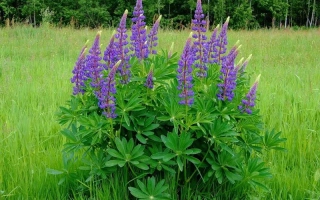
Variety "SNYEGYETY" – narrow-leaved lupine (Lupinus angustifolius L.), early maturing with a growing season of 90 to 118 days, which allows for quick cutting of the plant and obtaining a harvest within a short season. The plant is erect, indeterminate, with a height of usually 50–70 cm, light green leaves, and terminal leaflets that are narrow and of medium length. Flowers are white with a yellowish tip of the keel, while seeds are oval-kidney-shaped, slightly flattened, without ornamentation.
The variety is distinguished by high resistance to pod splitting, low alkaloid content (0.02% below the standard), and good resistance to anthracnose, root rot, fusarium, and rust. The mass of 1000 seeds is 160–170 g, protein content in the seeds is 35–37%, and in the dry matter of green mass reaches 21.7%. Thanks to these characteristics, "SNYEGYETY" is suitable both for feeding livestock and for seed production.
Yield varies by region: in the North-West region, the average dry matter yield is from 24 to 39 c/ha, and in the Central region – about 56 c/ha. Seed yield reaches 15–20 c/ha in northern areas and 20–33 c/ha in central areas. High productivity, stable protein content, and low toxicity make this variety in demand both for agricultural production and for fodder purposes.
The variety is distinguished by high resistance to pod splitting, low alkaloid content (0.02% below the standard), and good resistance to anthracnose, root rot, fusarium, and rust. The mass of 1000 seeds is 160–170 g, protein content in the seeds is 35–37%, and in the dry matter of green mass reaches 21.7%. Thanks to these characteristics, "SNYEGYETY" is suitable both for feeding livestock and for seed production.
Yield varies by region: in the North-West region, the average dry matter yield is from 24 to 39 c/ha, and in the Central region – about 56 c/ha. Seed yield reaches 15–20 c/ha in northern areas and 20–33 c/ha in central areas. High productivity, stable protein content, and low toxicity make this variety in demand both for agricultural production and for fodder purposes.
Crop & resistance
Crop
Disease resistance
Specifications
| Usage | |
|---|---|
| Registration year | 2002 |
| Catalog | Catalog → Lupin |
| Legal data |
Show · 1
|
| Country | Russia |
Store offers
Prices are updated on loadLoading offers…
Aggregator catalog: prices are collected automatically from store websites, normalized by AI and converted at the current exchange rate. Before ordering, confirm the price and availability on the store's website. This block is not indexed by search engines — the data is loaded after the page opens.
Not yet комментариев. Be the first!





See also
Often considered together with this variety






Recently viewed
Products you’ve viewed on this site
Reviews · 0