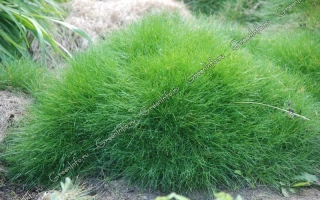
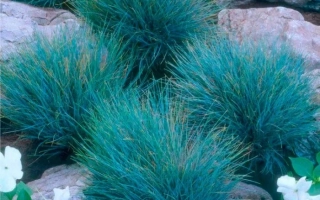
Fescue is a perennial herbaceous plant belonging to the Festuca genus. The plant is characterized by an upright stem ranging from 10 to 120 cm in length and leaves up to 1.5 cm wide, often rolled along the plane. The root system may include creeping underground shoots, providing drought resistance and allowing the plant to quickly recover biomass after unfavorable periods.
Fescue is widely used as fodder grass due to its high protein content. It is also valued in landscape design: decorative varieties, such as Intense Blue, Blue Red, and Azurit, feature compact tufted growth and dense green crowns, creating shade and protection from direct sunlight. These plants are easy to mow, frost-resistant, and require minimal care: watering should be conducted only to the root zone, and cutting should be done 8–10 cm after leaf drop.
For growing fescue, hot, dry areas with good lighting are preferred. It withstands summer heat and can grow in cold drafts. Loamy and clayey soils with good drainage are suitable; optimal pH ranges from 6.5 to 7.5. Care for the plant is simple: remove withered leaves in spring and cut the inflorescence after flowering. Fescue is also used as seed material for sports lawns and pastures, thanks to its wear resistance and ability to quickly cover the soil.
Thus, fescue represents a versatile plant that combines fodder properties, decorative appeal, and ease of care, making it in demand both in agriculture and landscape design.