


SKU #69468
·
36 views
SIBERIA SPRING
Clover
User rating
0 votes0% positive reviews
No ratings yet — be the first.
Usage Type
Pasture, Feed on green mass, Lawn
Flower Color
Pink, Purple
Hay Yield (t/ha)
5-7
Variety Characteristics
Good for bees, Resistant to fungal diseases
About product

Alfalfa variety SIBERIA SPRING is a biennial or diploid species with a multi-stemmed bush of semi-erect form. Stems can reach heights from 15 to 60 cm, being hairless or slightly hairy, of medium thickness and length, and can be very long in favorable years. Leaves have 3 to 6 leaflets, with the central leaflet varying in length and width from short to long and from narrow to wide. A characteristi…
Usage Type
Pasture, Feed on green mass, Lawn
Flower Color
Pink, Purple
Hay Yield (t/ha)
5-7
Variety Characteristics
Good for bees, Resistant to fungal diseases
Description
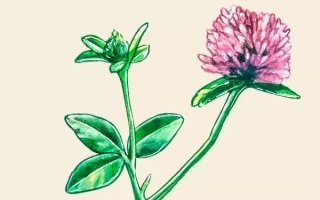
Alfalfa variety SIBERIA SPRING is a biennial or diploid species with a multi-stemmed bush of semi-erect form. Stems can reach heights from 15 to 60 cm, being hairless or slightly hairy, of medium thickness and length, and can be very long in favorable years. Leaves have 3 to 6 leaflets, with the central leaflet varying in length and width from short to long and from narrow to wide. A characteristic feature of the variety is a large number of leaves with white marks and a light green leaf color.
The SIBERIA SPRING variety differs in early or late flowering time depending on the growing region and has good dry matter yield, reaching an average of 79.5 c/ha. It is resistant to anthracnose, is weakly affected by this disease, but is moderately susceptible to alfalfa canker and alfalfa weevil. Thanks to its adaptability, the variety is recommended for cultivation in various regions of Russia, including the Volga-Vyatsky, Central, East-Siberian regions, and the Sverdlovsk region.
Alfalfa SIBERIA SPRING is widely distributed in natural conditions of Siberia and beyond, including Eastern Europe, Central Asia, the Far East, Mongolia, Northern China, the northern part of the Korean peninsula, and Japan. It prefers dry, valley, and forest meadows, meadow steppes, sparse forests, edges, river banks, and fallow land. This variety is a valuable fodder plant, possessing good productivity and adapted to various climatic conditions.
The SIBERIA SPRING variety differs in early or late flowering time depending on the growing region and has good dry matter yield, reaching an average of 79.5 c/ha. It is resistant to anthracnose, is weakly affected by this disease, but is moderately susceptible to alfalfa canker and alfalfa weevil. Thanks to its adaptability, the variety is recommended for cultivation in various regions of Russia, including the Volga-Vyatsky, Central, East-Siberian regions, and the Sverdlovsk region.
Alfalfa SIBERIA SPRING is widely distributed in natural conditions of Siberia and beyond, including Eastern Europe, Central Asia, the Far East, Mongolia, Northern China, the northern part of the Korean peninsula, and Japan. It prefers dry, valley, and forest meadows, meadow steppes, sparse forests, edges, river banks, and fallow land. This variety is a valuable fodder plant, possessing good productivity and adapted to various climatic conditions.
Crop & resistance
Crop
Disease resistance
Specifications
| Usage Type | |
|---|---|
| Flower Color | |
| Hay Yield (t/ha) | 5-7 |
| Variety Characteristics | |
| Registration year | 1997 |
| Catalog | Catalog → Clover |
| Legal data |
Show · 9
|
| Country | Russia |
Store offers
Prices are updated on loadLoading offers…
Aggregator catalog: prices are collected automatically from store websites, normalized by AI and converted at the current exchange rate. Before ordering, confirm the price and availability on the store's website. This block is not indexed by search engines — the data is loaded after the page opens.
Not yet комментариев. Be the first!



See also
Often considered together with this variety


Recently viewed
Products you’ve viewed on this site
Reviews · 0