

SKU #69451
·
45 views
Mars
Clover
User rating
0 votes0% positive reviews
No ratings yet — be the first.
Vegetation Period
55-70
Plant Height
40-80
Flower Color
Purple
Variety Characteristics
High protein content, Resistant to fungal diseases
About product
Clover of the MARS variety is an early-maturing tetraploid two-cut variety characterized by high winter hardiness and resistance to diseases such as anthracnose, fusarium, and clover root rot. The period from spring regrowth to the first cut is 48-55 days, which is 10-15 days earlier compared to the Tetraploid VIK variety. Flowering and seed maturation occur simultaneously, without the formation o…
Vegetation Period
55-70
Plant Height
40-80
Flower Color
Purple
Variety Characteristics
High protein content, Resistant to fungal diseases
Description
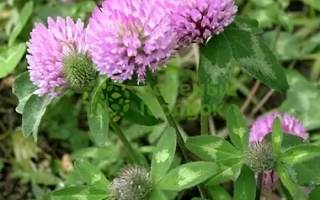
Clover of the MARS variety is an early-maturing tetraploid two-cut variety characterized by high winter hardiness and resistance to diseases such as anthracnose, fusarium, and clover root rot. The period from spring regrowth to the first cut is 48-55 days, which is 10-15 days earlier compared to the Tetraploid VIK variety. Flowering and seed maturation occur simultaneously, without the formation of sub-bushes, ensuring uniform crop quality.
Plants of the MARS variety have an erect bush with stem heights in the first cut ranging from 80 to 100 cm and an average number of internodes of about 7. Foliage of the first cut varies from 48 to 60%, while the second cut varies from 58 to 82%. Seeds are bean-shaped, their color ranges from purple to purple-yellow, and the mass of 1000 seeds is 3.2-3.5 g. Maximum yield of dry matter reaches 12 tons per hectare, and seeds reach 500 kg per hectare.
The content of crude protein in dry matter is in the range of 17.0-19.0%, and fiber is 25.0-27.0%. These indicators make the MARS variety valuable for feed purposes, ensuring high quality and nutritional value. Thanks to its characteristics, the variety is suitable for cultivation in various climatic conditions and can be used both in agriculture and in specialized agro-technical programs.
Plants of the MARS variety have an erect bush with stem heights in the first cut ranging from 80 to 100 cm and an average number of internodes of about 7. Foliage of the first cut varies from 48 to 60%, while the second cut varies from 58 to 82%. Seeds are bean-shaped, their color ranges from purple to purple-yellow, and the mass of 1000 seeds is 3.2-3.5 g. Maximum yield of dry matter reaches 12 tons per hectare, and seeds reach 500 kg per hectare.
The content of crude protein in dry matter is in the range of 17.0-19.0%, and fiber is 25.0-27.0%. These indicators make the MARS variety valuable for feed purposes, ensuring high quality and nutritional value. Thanks to its characteristics, the variety is suitable for cultivation in various climatic conditions and can be used both in agriculture and in specialized agro-technical programs.
Crop & resistance
Crop
Disease resistance
Specifications
| Vegetation Period | 55-70 |
|---|---|
| Plant Height | 40-80 |
| Flower Color | |
| Variety Characteristics | |
| Registration year | 1993 |
| Catalog | Catalog → Clover |
| Legal data |
Show · 1
|
| Country | Russia |
Store offers
Prices are updated on loadLoading offers…
Aggregator catalog: prices are collected automatically from store websites, normalized by AI and converted at the current exchange rate. Before ordering, confirm the price and availability on the store's website. This block is not indexed by search engines — the data is loaded after the page opens.
Not yet комментариев. Be the first!





See also
Often considered together with this variety


Vityaz
ФГБНУ Федеральный Аграрный Научный Центр Северо-востока имени Н.В. Рудницкого
040 2 offers
13.9 €per 1 kg ≈ 718 ₴

LYGHOVSKAYA 28
Фгбну Внии Сахарной Свеклы И Сахара Имени А.Л.Мазлумова
060 1 offer
13.37 €per 1 kg ≈ 690 ₴
Recently viewed
Products you’ve viewed on this site
Reviews · 0