


SKU #45293
·
33 views
Canterbury F1
Carrot
BejoUser rating
0 votes0% positive reviews
No ratings yet — be the first.
Variety Type
Shantane
Direction
Wash, Recycling
Maturation Period
130 - 140 days
Root; shape
Conical
About product

Canterbury F1 carrot is a late-maturing, high-yielding hybrid of the Chantenay type, developed by the Dutch breeding company Bejo Zaden. The vegetative period lasts 130-135 days, after which up to 12 kg of roots can be harvested per square meter. The hybrid features a strong leafy canopy, approximately 40 cm tall, dark green in color, and requires careful agronomic practices including proper crop…
Variety Type
Shantane
Direction
Wash, Recycling
Maturation Period
130 - 140 days
Root; shape
Conical
Description
Canterbury F1 carrot is a late-maturing, high-yielding hybrid of the Chantenay type, developed by the Dutch breeding company Bejo Zaden. The vegetative period lasts 130-135 days, after which up to 12 kg of roots can be harvested per square meter. The hybrid features a strong leafy canopy, approximately 40 cm tall, dark green in color, and requires careful agronomic practices including proper crop rotation, maintaining optimal soil moisture, and avoiding overcrowding. Carrots are sensitive to soil quality and excessive organic fertilizers, so regular loosening, watering, and root feeding are essential.
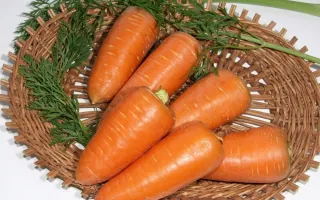
Canterbury F1 roots have a conical, more elongated shape compared to typical Chantenay varieties, smooth skin, and blunt ends. Root lengths vary from 12 to 20 cm, with diameters of 3-5 cm and weights of 100-150 grams. The bright orange flesh and skin indicate high carotene content (approximately 22 mg per 100 g) and sugars (7.5-9%), giving the carrots juiciness, sweetness, and firmness. The absence of green shoulders and small core make the roots attractive for washing and packaging. Due to these qualities, the carrot is ideal for fresh markets, as well as for processing into baby food, juices, canning, and freezing.
The hybrid shows resistance to leaf diseases, cracking, and greening, ensuring high-quality harvests and excellent storability, especially for summer sowings. Canterbury F1 tolerates mechanical harvesting, simplifying harvest operations. To achieve maximum productivity, seeds should be sown at a density of 0.8 to 1 million per hectare, with adequate watering and soil loosening. This approach ensures a stable, high-quality carrot harvest with excellent taste and market characteristics.
Canterbury F1 roots have a conical, more elongated shape compared to typical Chantenay varieties, smooth skin, and blunt ends. Root lengths vary from 12 to 20 cm, with diameters of 3-5 cm and weights of 100-150 grams. The bright orange flesh and skin indicate high carotene content (approximately 22 mg per 100 g) and sugars (7.5-9%), giving the carrots juiciness, sweetness, and firmness. The absence of green shoulders and small core make the roots attractive for washing and packaging. Due to these qualities, the carrot is ideal for fresh markets, as well as for processing into baby food, juices, canning, and freezing.
The hybrid shows resistance to leaf diseases, cracking, and greening, ensuring high-quality harvests and excellent storability, especially for summer sowings. Canterbury F1 tolerates mechanical harvesting, simplifying harvest operations. To achieve maximum productivity, seeds should be sown at a density of 0.8 to 1 million per hectare, with adequate watering and soil loosening. This approach ensures a stable, high-quality carrot harvest with excellent taste and market characteristics.
Crop & resistance
Crop
Disease resistance
Specifications hover over for a hint about the specification
|
Variety Type
Variety Type
Carrot varieties are grouped into ten variety types: Parisian Carrot. Round, high-carotene carrots. Characterized by a short growing season. Varieties of this type have round-oval roots no longer than 10 cm and up to 50 g in weight. Mostly used in greenhouses, for early harvest a... |
|
|---|---|
|
Direction
Direction
Existing varieties and types of cabbage are grown for fresh consumption, long-term storage, and technical processing. |
|
|
Maturation Period
Maturation Period
Vegetation period from emergence to technical maturity 30-50 days. |
130 - 140 days |
|
Root; shape
Root; shape
Roots can be round, elongated-round, cylindrical, conical. |
|
|
Root vegetable; color
Root vegetable; color
Carrot root can be orange, red-orange, pink, yellow, white, purple. The intensity of color depends on the content of pigments. |
|
|
Root vegetable; length
Root vegetable; length
The root vegetable length varies from 10 to 35 cm, diameter 1.5-8 cm. |
15 - 20 cm |
|
Recommended Density
Recommended Density
Optimal productivity is achieved at a planting density of 4000-5500 plants/ha. Possible planting scheme: 300-500x40-80 cm. |
0.8 - 1.0 million pcs/ha |
| Registration year | 2010 |
| Catalog | Catalog → Carrot |
| Manufacturer | Bejo |
| Country | Netherlands |
Store offers
Prices are updated on loadLoading offers…
Aggregator catalog: prices are collected automatically from store websites, normalized by AI and converted at the current exchange rate. Before ordering, confirm the price and availability on the store's website. This block is not indexed by search engines — the data is loaded after the page opens.
Not yet комментариев. Be the first!
Alternatives
Carrot seeds · similar varieties







See also
Often considered together with this variety


QUEEN OF AUTUMN
Научно-производственная Фирма Российские Семена
035 94 offers
0.12 €per 1000 seeds ≈ 6 ₴


Recently viewed
Products you’ve viewed on this site
Reviews · 0