


SKU #45312
·
39 views
Nanda F1
Carrot
Nickerson ZwaanUser rating
0 votes0% positive reviews
No ratings yet — be the first.
Variety Type
Shantane
Direction
Recycling
Maturation Period
120 - 130 days
Root; shape
Semi-conical
About product

A reliable mid-late Chantenay hybrid optimized for processing with excellent disease resistance.
Variety Type
Shantane
Direction
Recycling
Maturation Period
120 - 130 days
Root; shape
Semi-conical
Description
A Benchmark for Industrial Carrot Processing
The «Nanda F1» carrot, developed by the renowned Dutch seed company Nickerson Zwaan, remains a cornerstone for commercial growers who prioritize industrial processing and long-term storage. As a member of the Chantenay variety group, it is celebrated for its remarkable adaptability to heavy soils and its consistent ability to produce high-quality, uniform yields where other varieties might struggle with malformation.
Agronomic Strengths
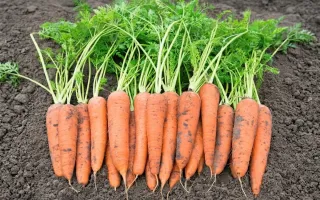
With a maturity cycle of 120–130 days, Nanda F1 falls into the mid-late category. The roots, reaching 20–25 cm in length, possess a classic semi-conical shape and an intense orange color. This color stability is vital for processors producing juices, purees, or frozen vegetable medleys, as the pigment remains vibrant even after thermal treatment.
One of the defining features of Nanda F1 is its robust resistance profile. Nickerson Zwaan has focused on minimizing the risks associated with wet soil conditions and high disease pressure. The hybrid exhibits excellent resistance against common threats:
- Various root rots;
- Cercospora blight;
- Black leg (Erwinia);
- Bacterial and fungal soft rots.
This inherent phytosanitary strength allows growers to reduce the frequency of fungicide applications, significantly lowering input costs and enhancing the efficiency of the crop management program.
Why Nanda F1 Holds Market Value
Processors prefer Nanda F1 due to the high density and uniform shape of the roots, which ensures minimal waste during industrial peeling and processing. Unlike older open-pollinated varieties, Nanda F1 offers excellent storage potential, allowing producers to hold stock without compromising quality. This provides farmers with the strategic advantage of timing their sales to capitalize on peak market prices rather than being forced to sell immediately after harvest.
Choosing Nanda F1 is an investment in reliability. Even in a market saturated with new varieties, this Nickerson Zwaan classic holds its ground by offering a proven, predictable performance. It remains the gold standard for those who require a dependable, high-yielding, and resilient crop for industrial-scale operations.
Crop & resistance
Crop
Disease resistance
Specifications hover over for a hint about the specification
|
Variety Type
Variety Type
Carrot varieties are grouped into ten variety types: Parisian Carrot. Round, high-carotene carrots. Characterized by a short growing season. Varieties of this type have round-oval roots no longer than 10 cm and up to 50 g in weight. Mostly used in greenhouses, for early harvest a... |
|
|---|---|
|
Direction
Direction
Existing varieties and types of cabbage are grown for fresh consumption, long-term storage, and technical processing. |
|
|
Maturation Period
Maturation Period
Vegetation period from emergence to technical maturity 30-50 days. |
120 - 130 days |
|
Root; shape
Root; shape
Roots can be round, elongated-round, cylindrical, conical. |
|
|
Root vegetable; color
Root vegetable; color
Carrot root can be orange, red-orange, pink, yellow, white, purple. The intensity of color depends on the content of pigments. |
|
|
Root vegetable; length
Root vegetable; length
The root vegetable length varies from 10 to 35 cm, diameter 1.5-8 cm. |
20 - 25 cm |
| Registration year | 2003 |
| Catalog | Catalog → Carrot |
| Manufacturer | Nickerson Zwaan |
| Country | Netherlands |
Store offers
Prices are updated on loadLoading offers…
Aggregator catalog: prices are collected automatically from store websites, normalized by AI and converted at the current exchange rate. Before ordering, confirm the price and availability on the store's website. This block is not indexed by search engines — the data is loaded after the page opens.
Not yet комментариев. Be the first!
Alternatives
Carrot seeds · similar varieties





QUEEN OF AUTUMN
Научно-производственная Фирма Российские Семена
035 94 offers
0.12 €per 1000 seeds ≈ 6 ₴

See also
Often considered together with this variety


Recently viewed
Products you’ve viewed on this site
Reviews · 0