


SKU #45315
·
47 views
Napa F1
Carrot
BejoUser rating
0 votes0% positive reviews
No ratings yet — be the first.
Variety Type
Nantes
Direction
Bunch products
Maturation Period
80 - 90 days
Root vegetable; weight
50 - 80 grams, 80 - 100 grams
About product

Napa F1 carrot is an early-maturing Dutch hybrid of the Nantes type, distinguished by its rapid maturation within 80-95 days after sowing. This variety is actively cultivated in Ukraine and is intended for early harvest or a second crop cycle. The Napa F1 roots are bright orange, cylindrical or elongated-cylindrical in shape, measuring 15-20 cm in length and 70-180 grams in weight. They are dense,…
Variety Type
Nantes
Direction
Bunch products
Maturation Period
80 - 90 days
Root vegetable; weight
50 - 80 grams, 80 - 100 grams
Description
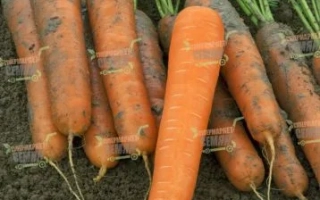
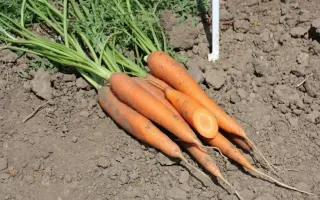
Napa F1 carrot is an early-maturing Dutch hybrid of the Nantes type, distinguished by its rapid maturation within 80-95 days after sowing. This variety is actively cultivated in Ukraine and is intended for early harvest or a second crop cycle. The Napa F1 roots are bright orange, cylindrical or elongated-cylindrical in shape, measuring 15-20 cm in length and 70-180 grams in weight. They are dense, uniform, with a small core practically indistinguishable from the flesh, ensuring high sugar, carotene, vitamin, and beneficial micronutrient content. Due to these qualities, the carrot is suitable for fresh salads, soups, purées, and juices, and it withstands transportation and short-term storage under cool conditions. For successful cultivation of Napa F1, it is recommended to use well-drained loamy and sandy loam soils, avoiding heavy clay soils where root deformation may occur. The hybrid prefers sunny locations with moderate moisture and does not require excessive nitrogen fertilization. Agronomic practices include standard procedures: thinning seedlings, weeding, loosening rows, and mineral fertilization. The carrot is resistant to major leaf diseases, pathogenic bacteria, bolting, and lodging, which simplifies care and increases yield. The Napa F1 hybrid is characterized by high productivity — with proper care, up to 5-6 kg of roots can be harvested per square meter, with yields reaching 50-55 tons per hectare. Early fruits, maturing as early as day 60 after germination, are suitable for summer salads, while more mature roots are used in diverse culinary dishes. The ability to replant allows for a fresh harvest throughout the season, making Napa F1 an attractive choice for gardeners and farmers seeking a stable and high-quality carrot harvest.
Crop & resistance
Crop
Disease resistance
Specifications hover over for a hint about the specification
|
Variety Type
Variety Type
Carrot varieties are grouped into ten variety types: Parisian Carrot. Round, high-carotene carrots. Characterized by a short growing season. Varieties of this type have round-oval roots no longer than 10 cm and up to 50 g in weight. Mostly used in greenhouses, for early harvest a... |
|
|---|---|
|
Direction
Direction
Existing varieties and types of cabbage are grown for fresh consumption, long-term storage, and technical processing. |
|
|
Maturation Period
Maturation Period
Vegetation period from emergence to technical maturity 30-50 days. |
80 - 90 days |
|
Root vegetable; weight
Root vegetable; weight
Carrot roots vary in weight from 60-150 g, sometimes 300-500 g. |
50 - 80 grams, 80 - 100 grams |
|
Root; shape
Root; shape
Roots can be round, elongated-round, cylindrical, conical. |
|
|
Root vegetable; color
Root vegetable; color
Carrot root can be orange, red-orange, pink, yellow, white, purple. The intensity of color depends on the content of pigments. |
|
|
Root vegetable; length
Root vegetable; length
The root vegetable length varies from 10 to 35 cm, diameter 1.5-8 cm. |
15 - 20 cm |
| Registration year | 2010 |
| Catalog | Catalog → Carrot |
| Manufacturer | Bejo |
| Country | Netherlands |
Store offers
Prices are updated on loadLoading offers…
Aggregator catalog: prices are collected automatically from store websites, normalized by AI and converted at the current exchange rate. Before ordering, confirm the price and availability on the store's website. This block is not indexed by search engines — the data is loaded after the page opens.
Not yet комментариев. Be the first!
Alternatives
Carrot seeds · similar varieties






See also
Often considered together with this variety


QUEEN OF AUTUMN
Научно-производственная Фирма Российские Семена
035 93 offers
0.12 €per 1000 seeds ≈ 6 ₴


Recently viewed
Products you’ve viewed on this site
Reviews · 0