


SKU #3503
·
421 views
Apple Tatarian Renet
Apple
User rating
0 votes0% positive reviews
No ratings yet — be the first.
Type of Sort
Winter Apple Variety
Store offers · 2 from 2 stores
Prices are updated on loadLoading offers…
Available at: Green Optima · Лучший Сад
Aggregator catalog: prices are collected automatically from store websites, normalized by AI and converted at the current exchange rate. Before ordering, confirm the price and availability on the store's website. This block is not indexed by search engines — the data is loaded after the page opens.
About product

Winter variety created by G. I. Rozanova at the Tatar Research Institute of Horticulture by crossing Borovinka with the Volga Renet. Approved for cultivation in the Volga-Vyatka and Lower Volga regions. Widespread in Tatarstan, Kirov Oblast, Mari El, Chuvash Republic.
Medium-sized tree with a wide, rounded, dense crown. Mixed fruiting type.
Medium-thick shoots, slightly knobby, dark brown…
Type of Sort
Winter Apple Variety
Description
Winter variety created by G. I. Rozanova at the Tatar Research Institute of Horticulture by crossing Borovinka with the Volga Renet. Approved for cultivation in the Volga-Vyatka and Lower Volga regions. Widespread in Tatarstan, Kirov Oblast, Mari El, Chuvash Republic.
Medium-sized tree with a wide, rounded, dense crown. Mixed fruiting type.
Medium-thick shoots, slightly knobby, dark brown, weakly hairy. Leaves green, medium-sized, round or broadly oval, slightly curved, folded, wrinkled, with doubly-lobed or toothed margins, long narrow-lanceolate stipules. Petiole short to medium length, medium thickness, red-purple.
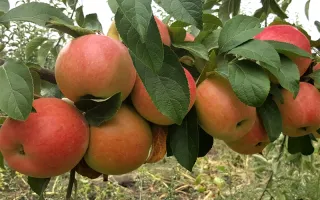
Medium-sized fruits, one-dimensional, strongly flattened and broad-conical, slightly ribbed. Main color greenish-cream or light green, covering color — uneven pink blush on the lower part of the fruit with speckles and interrupted stripes. Pedicel short. Calyx moderately deep, wide, slightly rusty. Receptacle closed. Seed chambers closed.
Flesh white or slightly greenish, juicy, medium density, pleasantly sweet-tart flavor, honey-like aroma.
Fruits contain: 12.8% dry matter, 0.66% titratable acids, 11.6% sugars, 10.7 mg/100g ascorbic acid.
Fruits ripen in late September, can be stored in storage until April, used fresh and processed (jam, compote, juice, wine), transportable.
Self-sterile, best pollinators — Anis New, Antonovka Ordinary, Vatutin. Enters fruiting stage on the 3rd-4th year after planting in orchards, productive. Winter-hardy, slightly affected by scab, medium-sized.
Crop & resistance
Crop
Disease resistance
Specifications
| Type of Sort | |
|---|---|
| Catalog | Catalog → Apple |
Not yet комментариев. Be the first!
Alternatives
Apple saplings · similar varieties


See also
Often considered together with this variety




Champagne Renet (Paper Renet, Remarkable Renet, Paper Renet)
11.3K 2 offers
2.89 €per seedling ≈ 148 ₴


Recently viewed
Products you’ve viewed on this site
Reviews · 0