An old Russian early-ripening variety of folk selection, especially loved by children. Due to its small fruit size, the variety has been excluded from regionalization, but it can still be found in small quantities in old gardens.
Medium-sized trees with a broom-like crown, long-lived, and relatively late to start fruiting.
Shoots are dark brown. Leaves are medium-sized or rather small, round-elliptical, slightly curved, almost not folded or with slightly uplifted edges, dense, leathery, dark green, shiny, slightly wrinkled, weakly hairy. Leaf margin is smooth with large teeth. Leaf base is rounded. Petioles are thin. Stipules are small, narrow, lanceolate.
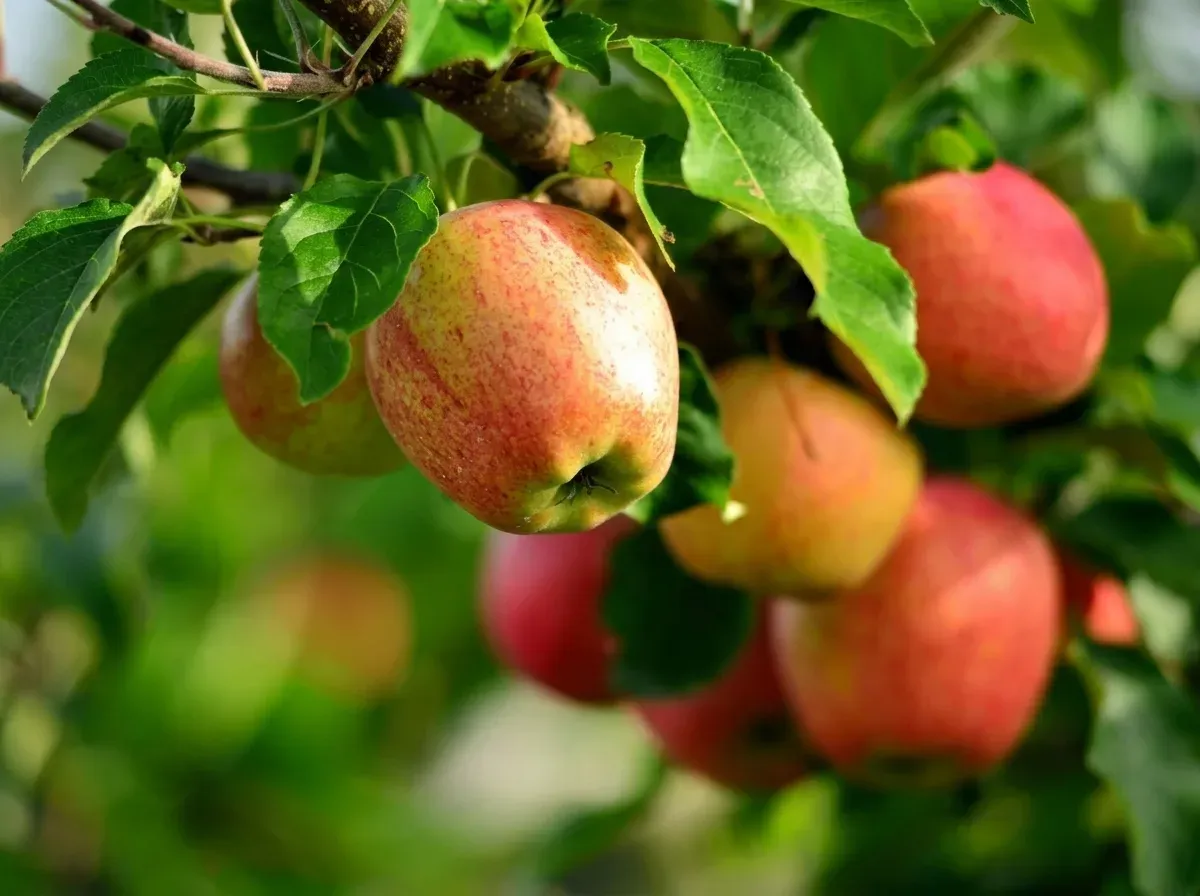
Fruits are small, often asymmetrical, flat, without ribs, grayish-green or yellow, with dull orange-red stripes. Skin is thin, dense, smooth, oily. Calyx is rusty. Receptacle is broad, small, with strongly swollen bumps at the base of the sepals. Calyx is disproportionately large relative to the fruit size.
Fruit flesh is yellowish, dense, almost tasteless, honey-like flavor. Yield is moderate.
Harvesting maturity in the Oryol region occurs in early August.
Fruits can be stored for 2-3 weeks. Winter hardiness is very high. The variety is relatively resistant to fruit rot.
Advantages of the variety: high winter hardiness, early fruit ripening, good taste.
Disadvantages of the variety: late entry into fruiting period, moderate yield, small, low-value fruits.







Reviews · 1