



SKU #3471
·
2 366 views
Apple Cinnamon Pear
Apple
User rating
6 votes83% positive reviews
No ratings yet — be the first.
Type of Sort
Winter Apple Variety
Tree; Growth Power
Medium-height
Tree; Canopy Shape
Round Canopy
Fruit; Fruit Shape
Oblong-rounded-conical
Store offers · 2 from 2 stores
Prices are updated on loadLoading offers…
Available at: AgronomVIP · Gardensber · Rodsad · Все для сада · Yaskrava Klumba
Aggregator catalog: prices are collected automatically from store websites, normalized by AI and converted at the current exchange rate. Before ordering, confirm the price and availability on the store's website. This block is not indexed by search engines — the data is loaded after the page opens.
About product
Winter variety selected by I.V. Michurin, obtained by crossing Orleans Renet with the hybrid Lithuanian Pepin x Chinese. The most widely grown variety in Russia and CIS countries. Approved for cultivation in the Northwest, Central, Volga-Vyatka, Central Chernozem, North Caucasus, Middle Volga, West Siberian, and East Siberian regions of Russia. Widely cultivated in private gardens and used in bre…
Type of Sort
Winter Apple Variety
Tree; Growth Power
Medium-height
Tree; Canopy Shape
Round Canopy
Fruit; Fruit Shape
Oblong-rounded-conical
Description
Winter variety selected by I.V. Michurin, obtained by crossing Orleans Renet with the hybrid Lithuanian Pepin x Chinese. The most widely grown variety in Russia and CIS countries. Approved for cultivation in the Northwest, Central, Volga-Vyatka, Central Chernozem, North Caucasus, Middle Volga, West Siberian, and East Siberian regions of Russia. Widely cultivated in private gardens and used in breeding.
Medium-sized tree, round in youth, broadly rounded with drooping branches in fruiting, dense crown requiring regular thinning. Fruit forms primarily on growth shoots (fruiting spurs, whip branches).
Shoots are long, slender, greenish-gray with a whitish coating, densely hairy. Leaves are small, oval with a pointed tip, matte, grayish due to heavy hairiness.
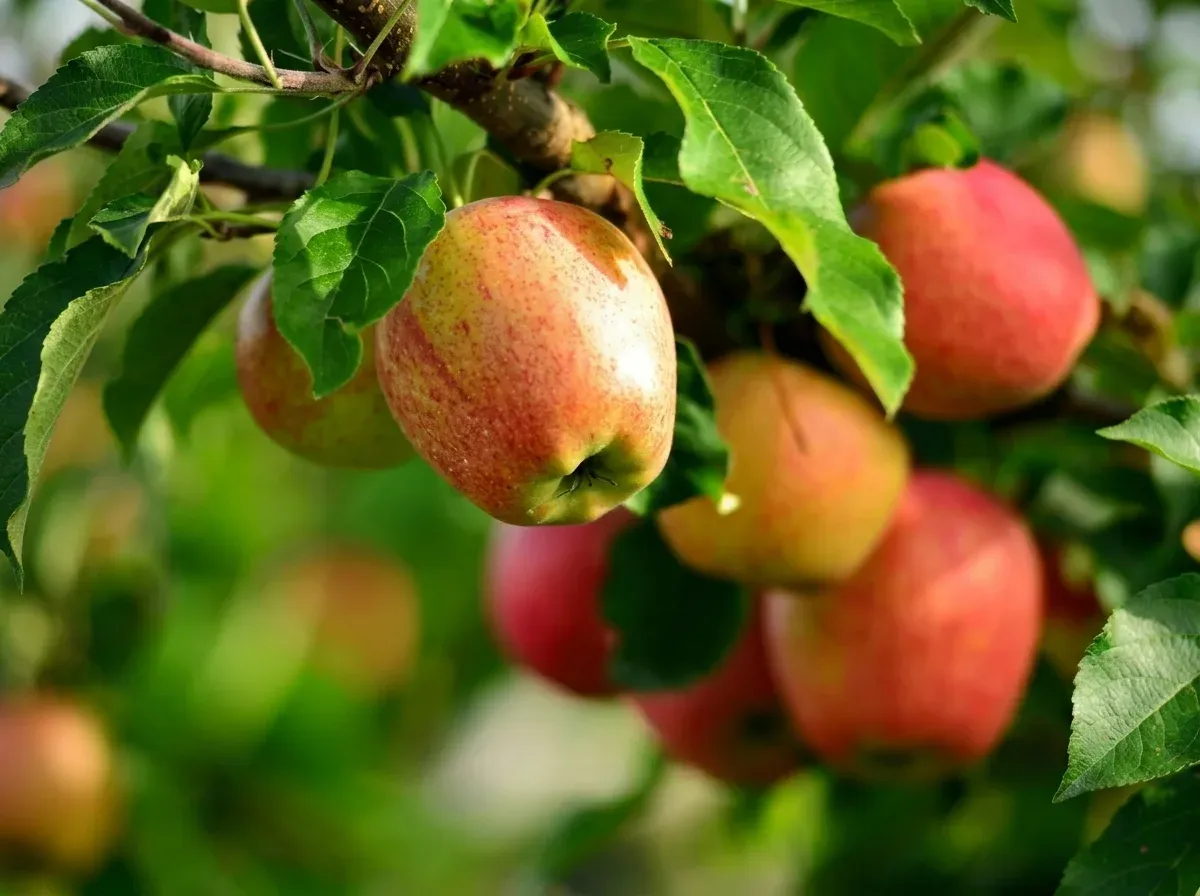
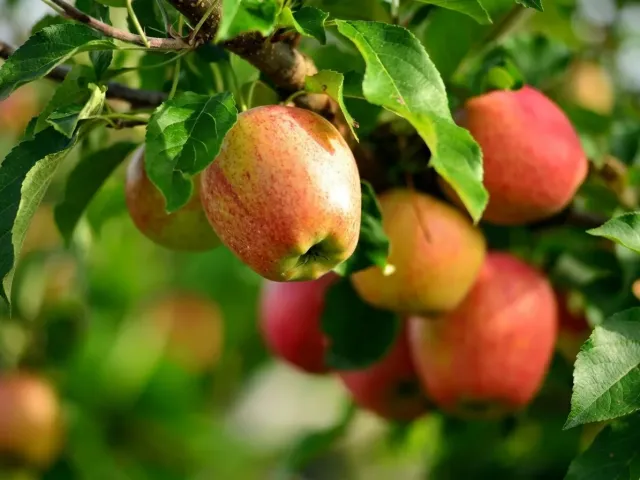
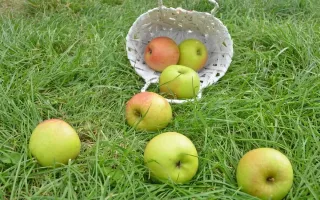
Fruits are medium to small, round-conical, with very weak ribbing, symmetrical. Surface smooth. Main color is greenish-yellow, with a diffuse dark red blush, featuring darker stripes and streaks, and numerous small white lenticels. Peduncle is long, slender, emerging from a narrow, deep cup with slightly rusted walls. Calyx is small, closed, located in a shallow dish with weak ridges. Subcalyx tube is small, funnel-shaped. Chambers are closed. No central cavity.
Flesh is creamy, firm, juicy, with a wine-sweet flavor and a subtle spicy aroma, good taste. Chemical composition of fruits: total sugars — 11.6%, titratable acidity — 0.57%, dry matter — 14.0% on fresh weight, ascorbic acid — 14.2 mg/100g, polyphenols — 167.4 mg/100g.
Winter-ripening fruits, highly transportable, can be stored in cold storage until February-March (223 days), versatile use. Processing products are high quality, especially jams.
Fruit-bearing begins on the 5th-7th year. Yields are abundant and annual. Trees have moderate winter hardiness; they suffer frost damage in severe winters but recover well.
Fruits and leaves are equally susceptible to scab (2.7 points), fruits are moderately susceptible to fruit moth.
Advantages of the variety: early fruiting, regular high yields, high self-fertility, high regenerative capacity, attractive fruit color, highly transportable.
Disadvantages of the variety: without pruning, fruits become smaller and prone to drop, susceptible to scab.
Cinnamon Pear proved to be a valuable breeding material. Around 20 new varieties have been developed using it. Especially intensively, Cinnamon Pear was used in breeding at the Siberian Institute of Horticulture named after M.A. Lisavenko. From crossing Purple Renet with Cinnamon Pear, the varieties Altai Blue, Altai Velvet, Mountain Altai, and Autumn Joy were created. Using Cinnamon Pear, the varieties Dream and Altai Souvenir were developed at the same institute. From crossing Cinnamon Pear with Antonovka ordinary at the Institute of Horticulture named after I.V. Michurin, the varieties Cherry and Friendship of Peoples were obtained. All listed new varieties are included in the State Register of Breeding Achievements (approved for cultivation).
Video · 9 videos
Suggest a video →Crop & resistance
Crop
Specifications
| Type of Sort | |
|---|---|
| Tree; Growth Power | |
| Tree; Canopy Shape | |
| Fruit; Fruit Shape | |
| Fruit; Fruit mass | 100-150 grams |
| Fruit; Fruit Color (Base Color) | |
| Fruit; Blush (Blush Color) | |
| Fruit; Lying | 6-7 months |
| Cold Resistance | |
| Catalog | Catalog → Apple |
Not yet комментариев. Be the first!
Alternatives
Apple saplings · similar varieties







See also
Often considered together with this variety




Recently viewed
Products you’ve viewed on this site
Reviews · 0