


SKU #60236
·
52 views
Tatyanin Den
Apple
BOTANIChESKIJ SAD MGU IM.M.V.LOMONOSOVAUser rating
0 votes0% positive reviews
No ratings yet — be the first.
Type of Sort
Autumn Apple Variety
Tree; Growth Power
Medium-height
Tree; Canopy Shape
Broad-pyramidal crown
Fruit; Fruit Shape
Flat-round
About product

The Tatyatin Day apple variety is a late-winter variety with a long fruit storage period, bred at Lomonosov Moscow State University. The tree has medium growth strength, a wide-round crown, and sturdy branches branching off the trunk at a right angle. The leaves are large, oblong, and dark green. The fruits of this variety are large, flat-round, with greenish-yellow skin adorned with blurred red s…
Type of Sort
Autumn Apple Variety
Tree; Growth Power
Medium-height
Tree; Canopy Shape
Broad-pyramidal crown
Fruit; Fruit Shape
Flat-round
Description
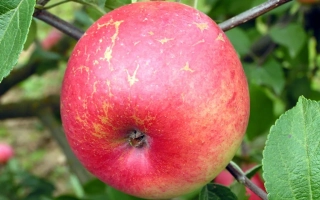
The Tatyatin Day apple variety is a late-winter variety with a long fruit storage period, bred at Lomonosov Moscow State University. The tree has medium growth strength, a wide-round crown, and sturdy branches branching off the trunk at a right angle. The leaves are large, oblong, and dark green. The fruits of this variety are large, flat-round, with greenish-yellow skin adorned with blurred red stripes. The apple flesh is juicy, fine-grained, acid-sweet, and without a pronounced aroma.
Harvesting is recommended in the middle or second half of September, allowing fruits to be consumed immediately after gathering when the taste is more acidic. With proper storage, apples retain their taste and freshness until March, making the variety particularly attractive for long-term use. The variety is distinguished by good winter hardiness and resistance to scab, as well as a high content of r-active substances in the fruits.
The Tatyatin Day apple tree is characterized by high productivity, early fruiting, and drought resistance, making it suitable for cultivation in the central region of Russia. However, the variety has some disadvantages, such as susceptibility to powdery mildew, rust, and gray mold, as well as susceptibility to pests, including aphids, flea beetles, and codling moths. Despite this, the variety is popular due to its large fruits, long storage period, and good taste qualities.
Harvesting is recommended in the middle or second half of September, allowing fruits to be consumed immediately after gathering when the taste is more acidic. With proper storage, apples retain their taste and freshness until March, making the variety particularly attractive for long-term use. The variety is distinguished by good winter hardiness and resistance to scab, as well as a high content of r-active substances in the fruits.
The Tatyatin Day apple tree is characterized by high productivity, early fruiting, and drought resistance, making it suitable for cultivation in the central region of Russia. However, the variety has some disadvantages, such as susceptibility to powdery mildew, rust, and gray mold, as well as susceptibility to pests, including aphids, flea beetles, and codling moths. Despite this, the variety is popular due to its large fruits, long storage period, and good taste qualities.
Crop & resistance
Disease resistance
Specifications hover over for a hint about the specification
| Type of Sort | |
|---|---|
| Tree; Growth Power | |
| Tree; Canopy Shape | |
| Fruit; Fruit Shape | |
| Fruit; Fruit mass | 250-300 grams |
| Fruit; Fruit Color (Base Color) | |
| Fruit; Blush (Blush Color) | |
|
Fruit; flesh color
Fruit; flesh color
Color of the fruit flesh. There are red, pink, yellow, and brown colors. |
|
| Fruit; Taste qualities | 4.0 stars |
| Fruit; Lying | 3-4 months |
| Cold Resistance | |
| Registration year | 2006 |
| Catalog | Catalog → Apple |
| Manufacturer | BOTANIChESKIJ SAD MGU IM.M.V.LOMONOSOVA |
| Country | Russia |
Store offers
Prices are updated on loadLoading offers…
Aggregator catalog: prices are collected automatically from store websites, normalized by AI and converted at the current exchange rate. Before ordering, confirm the price and availability on the store's website. This block is not indexed by search engines — the data is loaded after the page opens.
Not yet комментариев. Be the first!
Alternatives
Apple saplings · similar varieties

TIKHOMIROV REMEMBER APPLE
BOTANIChESKIJ SAD MGU IM.M.V.LOMONOSOVA
044 3 offers
6.01 €per seedling ≈ 309 ₴




See also
Often considered together with this variety


Recently viewed
Products you’ve viewed on this site
Reviews · 0