


SKU #61034
·
37 views
309-1/96
Sugar Beet
User rating
0 votes0% positive reviews
No ratings yet — be the first.
Root vegetable; size
Medium
Root; shape
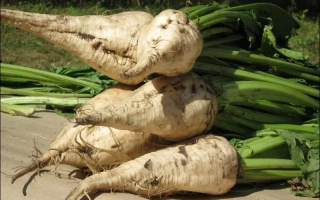
Cylindrical-conical
Registration year
2005
About product

A resilient sugar beet variety resistant to Cercospora and rots, ensuring stable yields.
Root vegetable; size
Medium
Root; shape
Cylindrical-conical
Registration year
2005
Description
Resilience Against Pathogens: The 309-1/96 Advantage
Sugar beet variety 309-1/96 represents a balanced approach to industrial crop production, focusing on field resilience rather than just forced yields. Developed by a team of experts including Sergey Skachkov, Vera Kovalevskaya, Nina Goryachikh, and Valentina Nuzhdina, this variety is engineered to withstand high phytosanitary pressure, specifically targeting fields prone to Cercospora leaf spot and powdery mildew.
Morphology and Field Performance
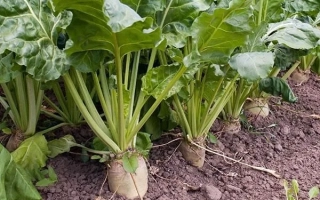
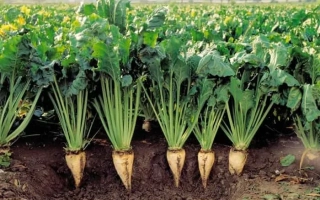
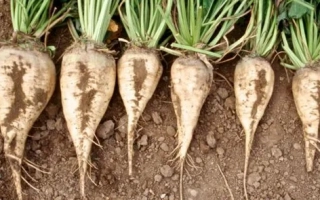
- Root Geometry: Featuring a cylindrical-conical shape, the root is designed for efficient mechanical harvesting. This shape reduces soil adhesion and minimizes breakage during the lifting process.
- Size Profile: The medium-sized root is a strategic choice for growers. It offers better storage stability compared to oversized beets and ensures consistent processing quality for sugar extraction.
- Disease Mitigation: The standout feature is its innate resistance to Cercospora and susceptibility management against rots. This minimizes the necessity for frequent fungicidal interventions, offering a clear economic benefit in terms of input costs.
Why Choose 309-1/96?
This variety is not for the producer seeking extreme, high-maintenance yields that require perfect environments. Instead, it is a robust solution for farmers operating in diverse climatic zones where disease outbreaks can ruin a crop in weeks. Its ability to maintain a healthy leaf canopy late into the season—despite high humidity or pathogen pressure—is its primary strength. It is an optimal choice for managers focusing on sustainable, risk-averse farming strategies. While other varieties may lose their structural integrity under heavy disease pressure, 309-1/96 remains a stable performer, delivering a reliable, middle-sized harvest that is easy to store and process. If your primary goal is to minimize crop loss from common fungal threats without over-relying on chemistry, this variety provides the necessary genetic security.
Crop & resistance
Crop
Disease resistance
Specifications hover over for a hint about the specification
| Root vegetable; size | |
|---|---|
|
Root; shape
Root; shape
Roots can be round, elongated-round, cylindrical, conical. |
|
| Registration year | 2005 |
| Catalog | Catalog → Sugar Beet |
| Legal data |
Show · 9
|
| Country | Russia |
Store offers
Prices are updated on loadLoading offers…
Aggregator catalog: prices are collected automatically from store websites, normalized by AI and converted at the current exchange rate. Before ordering, confirm the price and availability on the store's website. This block is not indexed by search engines — the data is loaded after the page opens.
Not yet комментариев. Be the first!
Alternatives
Sugar beet seeds · similar varieties


See also
Often considered together with this variety




Recently viewed
Products you’ve viewed on this site
Reviews · 0