

Disease · fungal
Powdery mildew of cucurbits
Leveillula cucurbitacearum
Description
Symptoms
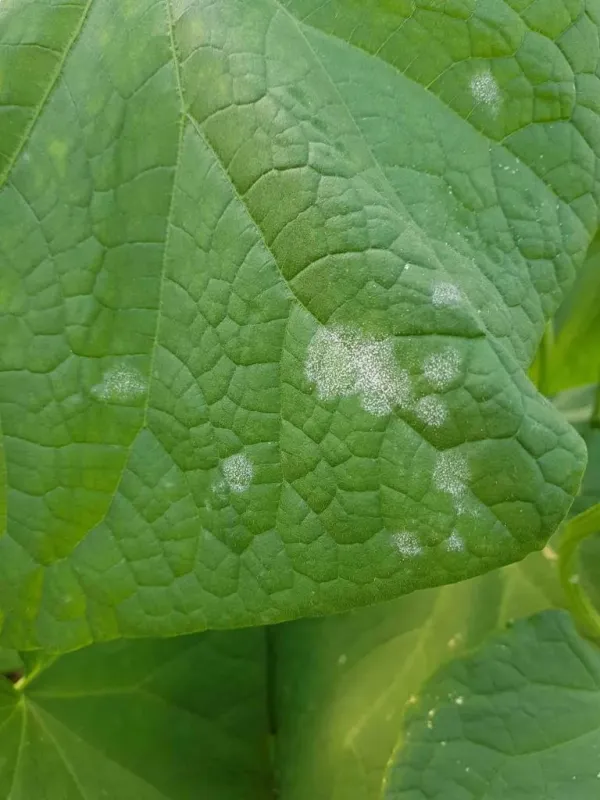
Initial symptoms are characterized by chlorotic (yellow) spots on the upper leaf surface. These spots often look like angular blotches and are frequently mistaken for nutrient deficiencies.
The characteristic white, powdery fungal growth appears primarily on the underside of leaves. As the disease advances, the mildew can cover both leaf surfaces, petioles, and even stems.
Affected leaves eventually turn brown, become brittle, and wither. Defoliation occurs progressively, exposing the fruit to direct solar radiation and potential sunscald.
In severe infections, the fungus significantly reduces the plant's ability to produce carbohydrates, leading to stunted overall growth and limited fruit development.
Infected fruits may exhibit deformation or poor ripening, and the internal physiological stress caused by the fungus makes the plant prone to secondary rot infections.
Pathogen
The disease is caused by the fungus Leveillula cucurbitacearum (often synonymous with Leveillula taurica). Unlike typical powdery mildews, this pathogen is an endoparasite, meaning the mycelium grows internally within the leaf tissue.
The fungus produces conidiophores that emerge through the plant's stomata to disperse spores. This specialized development makes it more persistent and harder to eradicate than surface-growing mildews.
The pathogen survives on infected crop residues or alternative host plants. Windborne conidia are the primary method of transmission, allowing for rapid spread across fields and greenhouses.
It has a very broad host range, infecting not only cucumbers, pumpkins, and melons but also numerous Solanaceae crops, which complicates integrated pest management.
Understanding the biology of this internal pathogen is crucial for timing fungicide applications, as internal colonization can occur before visible signs appear on the leaf surface.
Conditions for development
Powdery mildew of this type thrives in hot, dry climates. Unlike many other fungal diseases, high humidity is not strictly necessary for the initial infection stages.
Optimal temperatures for spore germination and mycelial growth range between 20°C and 30°C. These conditions are common in mid-to-late summer or in managed greenhouses.
Poor ventilation and high plant density are key drivers of the epidemic. Stagnant air allows spore concentrations to rise quickly within the crop canopy.
Plants under drought stress or those with unbalanced nutrient uptake, particularly excess nitrogen, are significantly more susceptible to successful colonization by the fungus.
The presence of wild reservoirs or weeds adjacent to the field serves as a constant source of inoculum throughout the growing season.
Why it matters
The disease causes a drastic reduction in the photosynthetic efficiency of the plant. Since cucurbits require significant energy to mature their large fruits, any reduction in leaf area directly affects yield.
Crop quality is severely compromised; smaller fruit size, bitterness, and loss of commercial value are typical outcomes of an unmanaged powdery mildew outbreak.
Premature senescence of the foliage shortens the production window, meaning the plant stops producing new fruit earlier than expected in the season.
The susceptibility of the plant to secondary pathogens increases, often leading to rapid collapse of the vine system once the powdery mildew has weakened the plant's structural integrity.
Economic losses are cumulative, involving both lost marketable yields and the added costs of frequent chemical interventions required to halt the disease progression.
Protection
Breeding and selecting resistant or tolerant varieties is the most effective long-term strategy for managing Leveillula infections in cucurbits.
Cultural practices, such as removing and destroying crop debris, are vital. Removing weeds that act as alternative hosts is also necessary to reduce local inoculum pressure.
Proper field management, including adequate spacing to ensure good airflow and precise irrigation to avoid plant stress, significantly lowers disease risk.
Fungicide programs should be initiated at the first sign of symptoms. It is essential to rotate between chemical classes to prevent the fungus from developing resistance.
- Use certified disease-free seeds.
- Ensure greenhouses are well-ventilated.
- Avoid excessive nitrogen fertilization.
- Implement strict crop rotation schedules.
Content graph
Connections · Powdery mildew of cucurbits
Most often together:
Marketplace
Products · 329







Community
Discussion
No discussions yet — be the first.