
Description
Symptoms
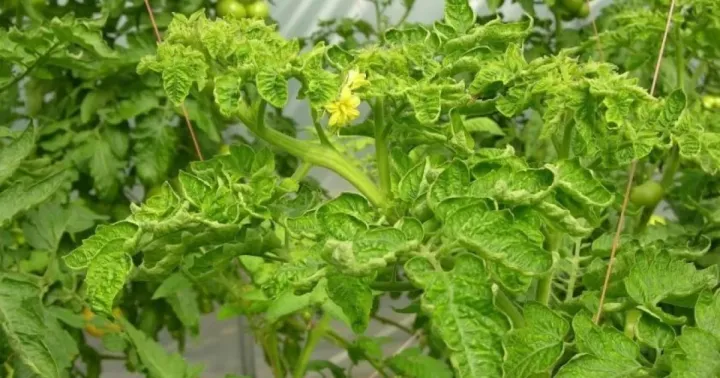
The most distinctive symptom is the upward curling and yellowing of leaf margins, which causes the leaves to take on a cup-shaped or crinkled appearance.
Infected plants exhibit severe stunting, with significantly shortened internodes, giving them a bushy and compressed growth habit.
Leaves become smaller than normal, thickened, and brittle, often displaying chlorotic mosaic patterns that reduce the efficiency of photosynthesis.
The flowering process is heavily impaired; flower buds often drop prematurely, or if they develop, they are misshapen and fail to set fruit.
Fruit set on infected plants is minimal or non-existent, and any fruits that do develop are usually undersized, distorted, and lack market quality.
Pathogen
The causative agent is the Tomato yellow leaf curl virus (TYLCV), which belongs to the genus Begomovirus within the Geminiviridae family.
The virus consists of a single-stranded circular DNA genome protected by a characteristic twinned (geminate) icosahedral protein capsid.
It is transmitted in a persistent, circulative manner by the silverleaf whitefly (Bemisia tabaci) after the insect feeds on infected plant sap.
Once acquired, the whitefly remains capable of transmitting the virus for the remainder of its life, but it cannot pass the virus to its offspring.
The virus has a broad host range including tomatoes, peppers, and various solanaceous weeds, which act as reservoirs for the pathogen.
Conditions for development
The spread of the disease is strictly dependent on the population dynamics of the whitefly vector, which thrives in warm and dry environmental conditions.
High temperatures, typically exceeding 25°C, accelerate both the life cycle of the whitefly and the replication rate of the virus within the host plant.
Greenhouse environments provide a favorable microclimate that allows for the year-round activity of whiteflies and the continuous spread of the disease.
Early-season infections are particularly devastating, as plants infected at the seedling or transplant stage suffer the most severe growth reduction.
The presence of wild solanaceous plants near agricultural fields ensures a constant supply of virus-carrying vectors throughout the growing season.
Why it matters
TYLCV is considered one of the most destructive diseases affecting tomato production worldwide, with no chemical cure available for infected plants.
In cases of early infestation, yield losses can reach 100%, causing the entire crop to be economically unviable and requiring total destruction of plants.
The virus alters the plant's metabolic processes, resulting in a cessation of development and a permanent decline in physiological health.
Infected plants serve as a persistent inoculum source, facilitating rapid transmission to surrounding healthy plants via migrating whiteflies.
The economic impact involves not only direct yield loss but also the increased costs associated with intensive insecticide application and exclusion measures.
Protection
The primary defense strategy involves rigorous whitefly control using a combination of systemic insecticides and biological control agents.
Installing fine-mesh insect screens on greenhouse openings is a critical preventive measure to exclude whiteflies from the growing area.
The use of TYLCV-resistant tomato cultivars is highly recommended, as these varieties provide the most sustainable protection against the virus.
Maintaining strict sanitation practices, such as removing weeds around fields and eliminating infected plants, helps reduce the viral reservoir.
Regular monitoring of whitefly populations using yellow sticky traps allows for timely intervention before the virus can reach epidemic levels.
Content graph
Connections · Tomato yellow leaf curl virus
Most often together:
Marketplace
Products · 121















Community
Discussion
No discussions yet — be the first.