
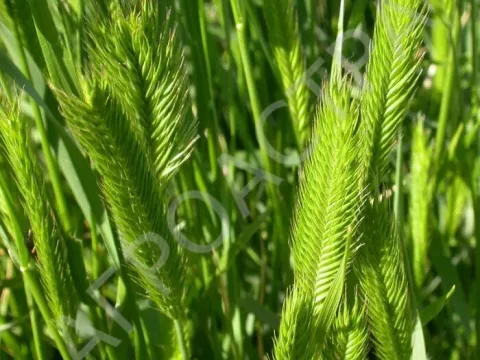
Siberian wheatgrass
Agropyron sibiricum (Willd.) P. Beauv.
Siberian wheatgrass (Agropyron sibiricum) is a robust perennial bunchgrass belonging to the Poaceae family. It is best established in early spring to take advantage of residual soil moisture for uniform germination.
What the section contains
Siberian wheatgrass
Late autumn seeding is also a viable practice in colder climates, allowing the seeds to establish quickly as soon as the ground thaws. The optimal seeding depth is typically between 2 to 4 centimeters.
Proper seedbed preparation is essential to ensure good soil-to-seed contact, as the seeds are relatively small compared to other forage grasses. Eliminating weed competition before sowing is crucial for successful establishment.
Depending on the intended use, planting can be done in rows for seed production or via broadcast seeding for pasture establishment. Maintaining proper spacing helps reduce stress during dry spells.
The establishment phase is often slow, requiring careful management to protect young plants from grazing or mowing until they are fully rooted and established in the soil.
The primary advantage of this species is its exceptional drought tolerance, making it an ideal choice for arid and semi-arid regions. It can survive in areas where annual rainfall is quite low.
It prefers well-drained soils and is highly tolerant of alkalinity and salinity. This adaptability allows it to thrive on poor soils where other forage crops would likely fail to produce significant biomass.
Siberian wheatgrass is hardy against extreme cold and can withstand harsh winter conditions with minimal snow cover. Its root system is deep and expansive, which helps in soil stabilization.
As a heliophyte, it requires full sunlight and does not tolerate competition from woody plants or shade. It is not suitable for floodplains or areas prone to seasonal inundation.
Soil pH preference is generally neutral to alkaline. It is particularly valued in steppe restoration projects due to its ability to survive with minimal external inputs.
The yield of Siberian wheatgrass is highly dependent on environmental factors and management practices. In typical dryland conditions, it provides moderate but reliable yields of high-quality hay.
When used for pasture, it exhibits good regrowth potential after grazing, provided that rotational grazing principles are followed. It remains palatable throughout most of the growing season.
Seed production is a significant commercial use for this crop, and yields are generally competitive with other wheatgrass varieties. Timely harvest is necessary to prevent significant seed shatter.
The nutritional profile of the hay is excellent, offering a good balance of crude protein and fiber content for livestock. It is often used as a winter feed supplement for cattle and sheep.
Longevity is a hallmark of this species, with well-managed stands remaining productive for many years, significantly reducing the costs associated with frequent reseeding.
This grass is generally resistant to most common diseases affecting cereal crops. However, rust diseases can occasionally occur under conditions of high humidity or poor air circulation.
Insect pests such as grasshoppers and wheat stem sawflies may affect the crop in certain regions. Monitoring populations is recommended during peak infestation periods to maintain yield quality.
Ergot infections may appear on seed heads, especially in wetter years. Using certified, disease-free seed is the most effective way to prevent the introduction of pathogens.
Small mammals, such as voles, may cause damage during the winter months, especially in stands with heavy debris. Maintaining clear field borders can help deter such pests.
Integrated pest management strategies are preferred, focusing on timely harvesting and field sanitation to disrupt the life cycles of potential pests.