
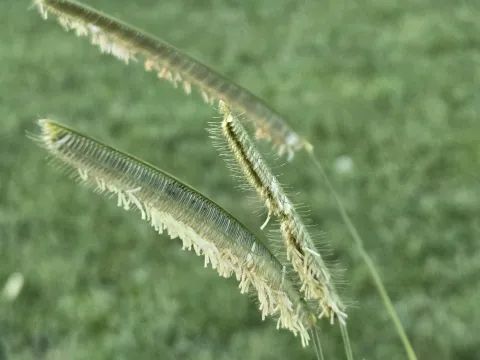
Ctenium
Ctenium
Ctenium belongs to the Poaceae family, a diverse group of perennial grasses known for their structural resilience and role in maintaining grassland ecosystems in tropical and subtropical regions.
What the section contains


Ctenium
Sowing should be conducted in late spring when soil temperatures reach stable levels, ensuring that the seeds have sufficient warmth to trigger the germination process effectively.
It is recommended to plant seeds at a shallow depth of approximately 1 to 2 centimeters to ensure that they are not buried under a layer too thick for the emerging shoots to penetrate.
For large-scale agricultural plantings, drilling or broadcasting methods are used, followed by rolling the field to press seeds into the soil and improve moisture contact.
Achieving a uniform stand requires attention to seed quality and the maintenance of optimal planting density, which prevents excessive competition between emerging seedlings.
Ctenium thrives in well-drained soil environments, showing a particular preference for sandy or loamy textures where oxygen availability to the roots is consistently high.
This genus is highly heliophilous, meaning it requires full sun exposure to maintain vigorous growth and produce the necessary biomass for forage or environmental restoration.
Climate requirements for Ctenium are generally suited to warm-season conditions, as the plants exhibit an active growth cycle during long, high-temperature periods typical of their origin.
Although the grass demonstrates moderate drought tolerance once established, supplemental irrigation during critical growth stages is beneficial for maximizing yield in dryer regions.
Nutrient management is essential for long-term health; while it survives in poor soils, periodic nitrogen fertilization significantly enhances leaf development and overall stand density.
Forage yield in Ctenium-dominated fields is highly dependent on the grazing strategy, with rotational grazing yielding significantly better results than continuous, uncontrolled grazing.
The plant demonstrates a consistent ability to recover after grazing or cutting, provided that the growth points remain undamaged and the soil moisture remains within optimal ranges.
In hay production, the yield per hectare is influenced by the density of the initial stand and the frequency of fertilizer application, which promotes robust vegetative reproduction.
Farmers aim to achieve high biomass output by managing the clipping frequency, ensuring the grass does not enter the reproductive stage too early, which would reduce the protein content of the forage.
Long-term productivity is a hallmark of this genus, allowing for sustainable agricultural use of pastures for several consecutive years without the need for extensive reseeding.
Fungal infections of the foliage, particularly those caused by high humidity and poor air circulation within the stand, represent the primary pathological risk to Ctenium.
Insects targeting the seed heads and reproductive structures can significantly impede the natural regeneration of the stand, necessitating monitoring during the flowering season.
Overgrazing poses a severe threat, as it strips the plant of the photosynthetic area required for energy storage, leading to root exhaustion and eventual stand thinning.
Preventative measures against threats include maintaining a proper stocking density on pastures and ensuring that the grass is not consistently cut shorter than the minimum recovery height.
While chemical interventions are possible, integrated pest management practices are preferred to preserve the ecological health of the grassland and the nutritional quality of the forage.
Harvesting for forage is best timed at the boot stage or early heading stage, as this period offers the best balance between biomass quantity and nutritional density.
When cutting for hay, it is essential to use equipment that allows for rapid drying, which helps in retaining essential vitamins and ensuring the palatability of the harvested crop.
Mechanical harvesting height should be set carefully, keeping at least 5 to 7 centimeters of stubble to ensure that the plants have enough reserves to regenerate quickly.
For seed harvesting, the crop must reach physiological maturity, indicated by the hardening of the caryopses and a shift in the color of the inflorescences to a mature straw tone.
Once harvested, seeds must be thoroughly cleaned and dried to a moisture content of roughly 12 to 14 percent to prevent microbial decay during the long-term storage phase.