
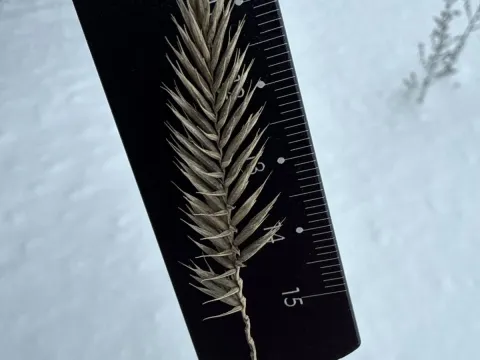
Crested wheatgrass
Agropyron Gaertn.
Crested wheatgrass is typically sown in early spring, as soon as the soil is dry enough for field machinery to operate. This timing allows the plant to take advantage of the moisture stored during the winter months, which is essential for germination.
What the section contains


Crested wheatgrass
Late autumn sowing is also a viable option in many regions. This method allows the seeds to remain dormant through the winter and germinate as soon as temperatures rise in the spring, often leading to more vigorous early establishment.
Seeds are generally planted at a depth of 2 to 4 centimeters. On heavy or clay-rich soils, a shallower planting depth is preferred, while on loose or sandy soils, planting slightly deeper helps ensure the seed maintains contact with moisture.
The row spacing depends on the primary goal of the crop. For hay production, a narrow row spacing of about 15 centimeters is standard, whereas for seed production, wider rows of 45 to 60 centimeters are used to promote better airflow and individual plant development.
Compacting the soil after seeding is a critical step to ensure good seed-to-soil contact. Using a packer or roller helps capillary action, bringing moisture up to the seeds and facilitating rapid and uniform emergence.
Crested wheatgrass belongs to the Poaceae family and is widely recognized for its exceptional drought tolerance and winter hardiness. It is a preferred choice for arid and semi-arid regions where other grasses fail to survive.
This species is highly adaptable to various soil types, performing well on chernozems, chestnut soils, and even moderately saline lands. It thrives in well-drained, fertile soils but can maintain productivity in nutrient-poor conditions.
The extensive and deep root system allows the plant to access deep-seated soil moisture, making it resilient to prolonged droughts. This characteristic makes it an excellent choice for stabilizing soil in harsh environments.
Crested wheatgrass requires full sunlight to achieve optimal growth. It does not tolerate shade well, and it is highly sensitive to waterlogging; therefore, well-drained sites are absolutely necessary for successful cultivation.
High temperatures are generally well-tolerated by the plant, provided it has established its root system. It remains a stable component of pasture mixtures, contributing to soil health and long-term forage production.
The forage yield of crested wheatgrass varies significantly based on site conditions and management practices. On average, yields range from 1.5 to 3 metric tons of hay per hectare under good environmental conditions.
The application of nitrogen fertilizers is the most effective way to boost yield. Fertilization is best applied in early spring or immediately after the first cut, significantly increasing biomass production and forage quality.
Seed yields are typically between 300 and 600 kilograms per hectare. Success in seed production relies on maintaining weed-free fields and providing adequate space for plants to develop robust seed heads.
This grass is extensively used for both grazing and hay production. It is highly palatable to cattle and sheep, providing essential proteins and energy during times when other forage resources might be scarce.
Beyond its forage value, crested wheatgrass is widely used for erosion control. Its dense root mass prevents topsoil loss on slopes and helps rehabilitate degraded or overgrazed rangelands.
Crested wheatgrass is generally hardy, but it can be susceptible to fungal diseases such as rust and smut. These conditions can diminish both the quality of the forage and the health of the seed crop.
Ergot can occasionally infect the seed heads, especially in years with higher-than-average humidity. Infected hay can be toxic to livestock, making regular field inspections during the flowering stage crucial.
Insects like the Hessian fly and various grass bugs can damage stems and foliage. These pests can significantly reduce biomass yield, especially in early stages of growth when the plants are most vulnerable.
Thrips can also infest the flowering structures, affecting seed set and quality. Management strategies focus on preventive measures, including crop rotation and the strategic use of insecticides only when infestation thresholds are exceeded.
Maintaining a healthy, vigorous stand is the best natural defense against pests and diseases. Proper grazing management and avoiding over-exploitation of the grass ensure the stand remains competitive against weeds and resilient to infection.
For hay production, the optimal harvest time is at the early heading stage. This is when the plant is at its nutritional peak, containing the best balance of protein, energy, and digestible fiber before the stems become overly lignified.
Delayed harvesting leads to a rapid decline in forage quality. Once the plant enters the maturity phase, the stems become woody and less palatable, leading to increased waste when fed to livestock.
Harvesting for seed requires waiting until full maturity, indicated by a straw-colored appearance. Swathing (windrowing) the grass before threshing helps prevent shatter loss and ensures uniform drying of the seed heads.
After the windrows have cured, combine harvesting is performed. Proper combine settings, especially for cylinder speed and air pressure, are essential to ensure efficient grain removal without damaging the seeds.
Post-harvest processing involves cleaning and drying the seeds to a moisture content of 12-14%. Storing them in a cool, dry, and well-ventilated area is necessary to maintain high viability and germination rates until the next planting season.