
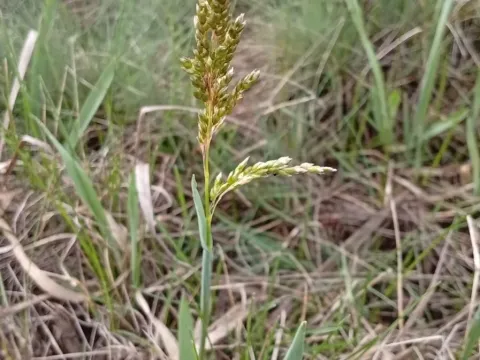
Creeping vernal grass
Anthoxanthum repens
The sowing of creeping vernal grass is best performed in early spring or late summer, ensuring the soil remains moist to facilitate successful germination.
What the section contains
Creeping vernal grass
The seeding rate typically ranges from 8 to 12 kilograms per hectare, depending on soil fertility and the method of sowing, with a shallow depth of 1–2 cm.
It is often recommended to sow this grass in mixtures with legumes, which enhances the protein content of the fodder and promotes sustainable soil nitrogen levels.
Soil consolidation using rollers after sowing is a critical step to ensure good seed-to-soil contact, leading to uniform emergence across the entire field.
During the establishment phase, it is essential to manage weed pressure, as the seedlings of this species grow relatively slowly in the first year.
Creeping vernal grass, a member of the Poaceae family, is characterized by its rhizomatous growth habit, which allows it to form a dense and resilient turf.
The species is quite adaptable to various soil types, preferring moderate moisture but exhibiting significant drought tolerance due to its deep root system.
While it thrives in sunny locations, the grass can also tolerate light shade, making it a versatile choice for inclusion in diverse pasture or meadow mixes.
It is known for its excellent winter hardiness, allowing it to survive in regions with harsh freezing conditions without significant losses in plant density.
The plant demonstrates high tolerance to varying soil acidity levels, making it suitable for a wide range of agricultural landscapes across different climates.
The biomass yield of this crop is significantly influenced by nutrient management, with nitrogen fertilization providing the greatest boost to stem development.
The grass is known for its distinct aromatic properties, containing coumarin, which makes the harvested hay particularly attractive and palatable to livestock.
When used in rotational grazing systems, creeping vernal grass recovers quickly, providing consistent forage availability throughout the entire growing season.
Under optimal management, the stand reaches its maximum productivity by the third or fourth year, providing reliable yields for several consecutive seasons.
Seed production is consistent, and proper harvest timing ensures high-quality seeds for replanting or field expansion within the farm's management plan.
Like many perennial grasses, this species can be susceptible to rusts and leaf spots, particularly in environments with high humidity and poor air circulation.
Insect pests such as cereal flies and aphids can damage the foliage during the vegetative stage, potentially reducing overall plant vigor and growth rates.
Integrated pest management strategies, including the use of resistant varieties and proper field rotation, are essential for maintaining a healthy crop stand.
Reducing field density during wet seasons and ensuring proper drainage can help mitigate the risk of fungal outbreaks that affect the overall yield quality.
Early identification of pest infestations is key; regular scouting of the fields allows farmers to intervene before the population of insects reaches economic thresholds.
Hay harvesting should ideally occur during the early heading stage to capture the best balance of nutrients, fiber, and the signature aromatic compounds.
Adjusting the mowing height is important to avoid damaging the rhizomes, ensuring the plants have enough energy stored for rapid regrowth after the harvest.
Proper curing of the hay in the field is necessary; farmers should avoid leaving the material in the sun for too long to prevent the loss of essential volatile oils.
Careful raking and baling under appropriate moisture conditions are required to store the forage effectively and maintain its nutritional profile for winter use.
Stored hay must be kept in well-ventilated areas to prevent microbial growth, ensuring the product remains high-quality until it is fed to livestock.