
Duranta
Duranta hybrids
Duranta hybrids are evergreen shrubs or small trees belonging to the Verbenaceae family. Originating from the tropical regions of the Americas, these plants have been extensively hybridized for horticultural use in warmer climates and controlled environments.
What the section contains
Duranta
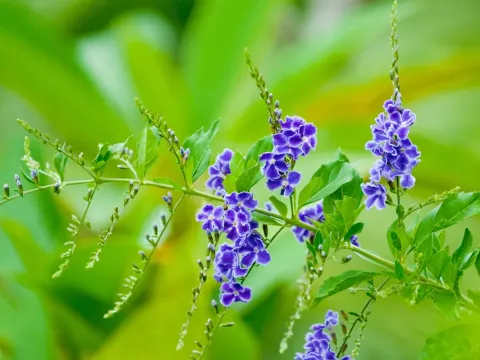
Botanically, the plant is characterized by its opposite or whorled leaves and often thorny branches, which makes it an ideal candidate for creating dense security hedges. The flowers grow in showy terminal racemes, followed by vibrant, orange-yellow berries that add to its ornamental value.
Successful cultivation requires high light levels, as insufficient sun causes the plant to become leggy and lose its structured growth habit. The optimal temperature for healthy development ranges from 20 to 25 degrees Celsius, as the plant is highly sensitive to frost and cold drafts.
Soil requirements focus on fertile, well-draining media with a neutral to slightly acidic pH level. Consistent moisture is necessary during the active growing season, though it is crucial to avoid waterlogging, which can quickly lead to root rot and other physiological stressors.
The primary economic use of Duranta is within the landscape industry, where it is valued for its ornamental appeal. It is commonly used for topiary work, garden hedging, and as a popular container plant for residential and commercial interior landscaping.
Common pests associated with Duranta cultivation include whiteflies, scale insects, and spider mites, particularly in indoor environments. If cultural conditions such as humidity and airflow are not maintained, the plant can become susceptible to powdery mildew or various root-borne pathogens.