
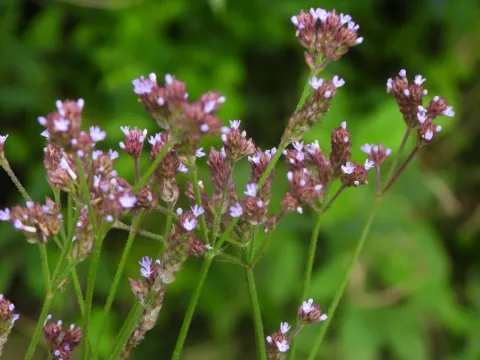
Brazilian verbena
Verbena brasiliensis
Brazilian verbena (Verbena brasiliensis), a member of the Verbenaceae family, is a tall, slender perennial often grown as an annual in cooler climates.
What the section contains
Brazilian verbena
The propagation process begins with sowing seeds in trays filled with a sterile, well-draining seed starting mix during the early spring season.
Seeds require light to germinate effectively, so they should be pressed lightly into the soil surface without covering them completely with substrate.
Maintaining a consistent temperature of approximately 20 degrees Celsius is essential for achieving optimal germination rates within two to three weeks.
Transplanting into larger pots or outdoor beds should be conducted once the danger of frost has passed to ensure steady growth and establishment.
This species thrives in full sun exposure, which is critical for maintaining its characteristic tall habit and promoting abundant flower production.
Soil quality should be moderate, provided that drainage is excellent, as the plant is sensitive to waterlogged conditions that lead to root rot.
While mature plants display some drought tolerance, regular watering is recommended during extended dry spells to keep the plant vigorous.
Fertilization should be handled with care; excessive nitrogen often leads to weak, floppy stems that require mechanical support to stay upright.
Proper air circulation is a key environmental requirement to prevent foliage from staying damp for too long, which is a precursor to fungal issues.
Powdery mildew is the most common fungal problem encountered when growing Brazilian verbena in regions with high humidity and poor ventilation.
Aphids and spider mites are frequent insect pests that target the terminal growth and the undersides of the leaves, weakening the plant structure.
Effective management includes the use of horticultural oils for minor infestations and systemic insecticides for severe outbreaks to protect the foliage.
Fungal infections can be suppressed by applying sulfur-based fungicides and ensuring that the irrigation is targeted at the root zone rather than leaves.
Monitoring the plant health weekly allows for early detection of potential threats, ensuring that corrective measures are taken before the plant is damaged.