
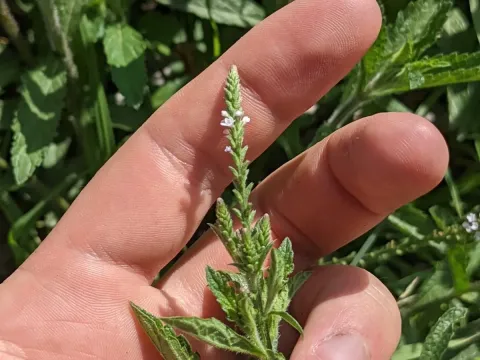
Carolina vervain
Verbena carolina
Carolina vervain (Verbena carolina) belongs to the Verbenaceae family and is recognized as a hardy perennial plant with a distinct upright growth habit.
What the section contains
Carolina vervain
Seeds should be sown in early spring, ideally after the danger of frost has passed and soil temperatures have reached at least 15 degrees Celsius.
For optimal results, starting seeds in a controlled environment such as a greenhouse or a cold frame 6-8 weeks prior to planting is standard practice.
The seeds require light to germinate; therefore, they should be only lightly pressed into the soil surface without being buried too deeply.
When sowing directly into the field, ensure the soil is finely tilled to create a seedbed that retains moisture but allows for rapid seedling emergence.
The crop thrives in full sun exposure, requiring at least six to eight hours of direct sunlight per day to maintain healthy development and potency.
It prefers well-drained, sandy loam soils with moderate fertility levels; heavy clay soils should be avoided or amended with organic matter.
While the plant is moderately drought-tolerant once established, consistent moisture levels during the early stages of growth are essential for yield.
Temperature regulation is critical; the ideal growing range is between 20 and 28 degrees Celsius for the production of biomass and medicinal compounds.
Regular weeding and maintenance of airflow between rows are necessary to prevent the accumulation of heat and humidity around the plant base.
Powdery mildew is the most significant disease for Verbena carolina, appearing as a white dusty fungal layer under conditions of poor air circulation.
Root rot, often caused by waterlogged soil, can severely damage the root system and significantly reduce the lifespan of the entire plantation.
Aphids and spider mites are the primary insect pests, capable of infesting young leaf tissue and causing stunting of the overall plant development.
Integrated pest management, including monitoring and the use of targeted biological controls, is highly recommended to maintain plant health.
Maintaining proper spacing between plants is the most effective cultural practice to minimize the risk of spreading fungal spores during wet weather.
The harvesting of Carolina vervain is typically carried out during the plant's peak flowering period when the concentration of phytochemicals is highest.
The aerial parts of the plant are usually collected, leaving enough foliage for the plant to recover and produce secondary growth for a later harvest.
Harvesting should be done in the morning once the dew has evaporated, as this prevents premature decay of the harvested plant material during processing.
After collection, the plant material requires immediate drying in a shaded, well-ventilated area to preserve the integrity of the active ingredients.
Proper storage involves keeping the dried product in airtight containers in a cool, dark place to maintain its quality for subsequent commercial use.