
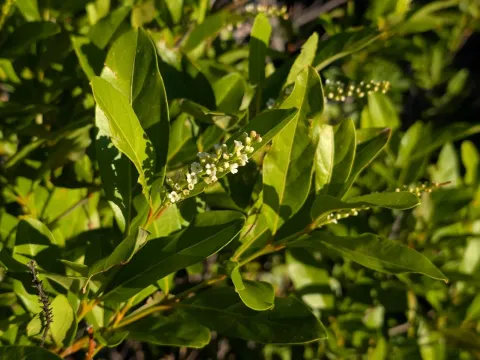
Fiddlewood
Citharexylum Mill.
Fiddlewood (Citharexylum Mill.) is a diverse genus of trees and shrubs belonging to the Verbenaceae family. The genus name is derived from the Greek words for "fiddle" and "wood," reflecting the historical use of the timber in some regions for crafting stringed instruments.
What the section contains
Fiddlewood
The botanical characteristics of Citharexylum include opposite, simple leaves and racemes of fragrant, small white or pale-colored flowers. Following flowering, the plants produce drupes which are highly attractive to local avian populations, adding ecological value to the landscape.
Regarding soil requirements, these plants thrive in well-drained, nutrient-rich soils. While they are adaptable to various soil textures, avoiding waterlogged conditions is critical for maintaining root health and preventing physiological distress in the plants.
Climate preference for Fiddlewood centers on warm, tropical, or subtropical environments. They generally require full sun exposure to maintain dense foliage and promote abundant flowering throughout the growing season in warmer climates.
In landscape architecture, Fiddlewood is primarily utilized for hedging, privacy screening, and as specimen trees in public parks. Its high tolerance to pruning makes it an excellent candidate for formal garden designs that require structured woody elements.
Common pests that can affect Citharexylum include scale insects and mealybugs, which tend to accumulate on stems and the undersides of leaves. Early detection and treatment with horticultural oils are often effective in managing these infestations.
Root rot and leaf spot are potential threats if the plant is subjected to poor drainage or excessive humidity. Ensuring proper spacing between plants and maintaining clear ground around the base helps mitigate the risk of fungal proliferation.