
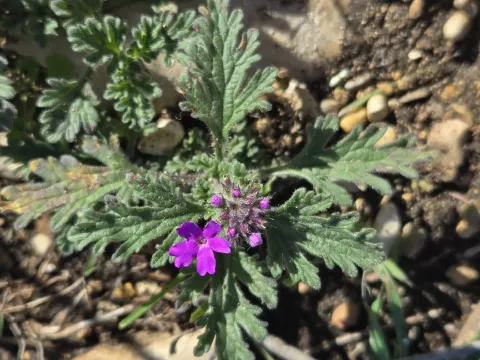
Garden verbena
Verbena x Glandularia
Garden verbena, scientifically known as Verbena x Glandularia, is a hybrid species often grown from seeds sown indoors. Sowing should ideally occur in late February or early March to ensure a long flowering season.
What the section contains

Garden verbena
The seeds require a shallow depth of approximately 3–5 millimeters in a well-draining seed-starting mix. Keeping the soil surface consistently moist during the germination period is essential for successful seedling emergence.
Once true leaves develop, seedlings must be pricked out into individual pots to prevent overcrowding and root competition. Hardening off the young plants for two weeks before transplanting is crucial for field success.
Transplanting to the permanent location in the garden takes place after the danger of frost has passed. Plants are usually spaced 20 to 30 centimeters apart to promote good air circulation between the foliage.
Direct seeding in the garden is possible in warmer climates, although it is less predictable than starting indoors. The soil must be thoroughly prepared with organic matter to support the rapid development of the root system.
Garden verbena belongs to the Verbenaceae family and is highly valued for its ornamental versatility in landscaping. It thrives best in full sunlight, requiring at least six to eight hours of direct exposure daily.
The crop prefers sandy-loam or light, well-draining soils with moderate fertility. While it is quite drought-tolerant once established, providing consistent moisture during the initial growth phase significantly boosts vigor.
Agrotechnical maintenance includes regular weeding, as the plant does not compete well with vigorous weeds in the early stages of its development. Mulching can help retain soil moisture and suppress weed growth.
Fertilization with a balanced, water-soluble fertilizer every two to three weeks during the growing season encourages profuse blooming. Deadheading spent flowers helps redirect the plant's energy toward producing new buds.
Garden verbena is typically grown as an annual in cooler regions, although it may behave as a short-lived perennial in frost-free zones. Proper site selection is the key to maximizing the lifespan and aesthetic impact of the crop.
The crop is susceptible to various fungal pathogens when environmental conditions are unfavorable. Diseases such as Alternaria leaf spot, Cercospora, and Rhizoctonia can cause severe damage if humidity levels are not controlled.
Powdery mildew is particularly common in areas with poor airflow and high nocturnal humidity. Applying preventative fungicides and ensuring proper spacing between plants are the primary methods for managing this infection.
Root-related issues, such as black root rot and gray mold (Botrytis), often occur in waterlogged or heavy soils. Once symptoms appear on the stems or foliage, the affected plants should be removed immediately.
Viral pathogens, including tomato mosaic virus, can stunt plant growth and cause characteristic foliage patterns. There is no chemical cure for these viruses, so insect control and sanitation are the only effective measures.
- Aphids
- Spider mites
- Thrips
- Whiteflies