
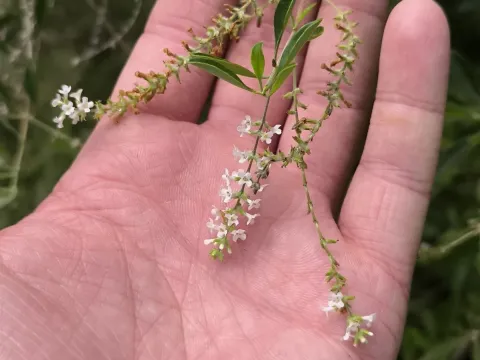
Aloysia
Aloysia Paláu
Aloysia (Aloysia), best known as lemon verbena, belongs to the Verbenaceae family. It is a perennial deciduous shrub native to South America, specifically Argentina, Chile, and Peru.
What the section contains

Aloysia
The plant is highly heat-loving and cannot tolerate freezing temperatures; therefore, in temperate climates, it is grown primarily in containers or as an annual crop. It prefers open, sunny locations protected from cold winds.
Soil for aloysia should be light, fertile, and have excellent drainage properties. The culture is critically sensitive to moisture stagnation, which triggers root rot, so drainage materials must be added to heavy soils.
For active vegetative growth, the plant requires regular watering during the summer, but with obligatory drying of the top layer of substrate between waterings. High air humidity is important, especially when growing indoors or in greenhouses.
Agrotechnics include regular fertilization with complex mineral fertilizers during the active growth phase, as well as systematic pruning. Shaping pruning promotes bushiness and increases the leaf mass, which is the main target for harvesting.
The main danger to aloysia in closed or protected soil conditions is posed by sucking pests. Most often, spider mites, whiteflies, and scale insects settle on the leaves, multiplying rapidly in dry air.
Due to improper watering or stagnant water in trays, plants are often affected by root rot. Fungal diseases can manifest as leaf spots when ventilation in rooms is poor.
Prevention of diseases involves maintaining optimal distance between plants to ensure air circulation. Regular inspection of the underside of the leaves allows for the timely detection of pest colonies.
If pests are detected, the use of bio-insecticides is recommended, as aloysia leaves are used in cooking and medicine. The use of systemic chemical pesticides is undesirable if the raw material is intended for human consumption.
To maintain plant health, it is important to avoid waterlogging and keep the cultivation area clean by timely removing withered parts of the plant.
Harvesting aloysia leaves is carried out during the period of maximum concentration of essential oils, which occurs just before the beginning of flowering. Harvesting is done in the morning hours after the dew has evaporated.
The leaves are carefully cut along with the shoots, preserving the structure of the bush for the subsequent regrowth of side branches. It is important not to cut more than one-third of the green mass at a time so as not to exhaust the plant.
Drying of the raw material is carried out in shaded, well-ventilated areas at a temperature not exceeding 35–40 degrees Celsius. When overheated, volatile aromatic components, which give the plant its recognizable lemon scent, evaporate quickly.
After drying, the leaves are separated from the woody stems and stored in tightly closed glass containers in a dark place. This allows the intense aroma to be preserved for up to one or two years.
The main areas of use are the food industry, production of aromatic teas, desserts, as well as the perfume industry and traditional medicine.