
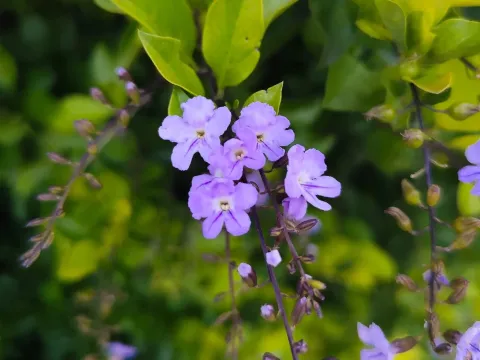
Duranta
Duranta L.
Duranta (lat. Duranta L.) is a genus of shrubs and trees belonging to the Verbenaceae family. The genus is native to tropical and subtropical regions of the Americas and consists of approximately 30 recognized species used primarily for ornamental purposes.
What the section contains


Duranta
The plant thrives in warm climates where temperatures remain consistently above +20 °C. It is strictly frost-sensitive and requires a frost-free environment to survive, making it a popular subject for greenhouse cultivation in temperate latitudes.
For optimal growth, Duranta requires well-drained, nutrient-rich soil with a neutral or slightly acidic pH. It is a heliophilous crop, meaning it demands direct sunlight for several hours a day to maintain healthy foliage and ensure profuse flowering.
Agrotechnical management includes consistent watering and routine pruning. Because the plant has a vigorous growth habit, frequent shearing is necessary to keep the desired shape and promote dense branching for hedge or topiary use.
The economic value of Duranta is primarily driven by the landscaping industry. It is widely utilized for creating clipped hedges, screen plantings, and container displays due to its ability to tolerate heavy pruning and its attractive berry production.
Common pests affecting Duranta include spider mites, scale insects, and whiteflies, which typically congregate on the undersides of the leaves. Monitoring programs are essential to detect infestations early and prevent damage to the plant tissue.
Pathological threats are often linked to improper soil moisture management, which leads to root rot diseases. Maintaining air circulation and avoiding waterlogged conditions are the primary preventative measures against fungal pathogens in a production setting.