
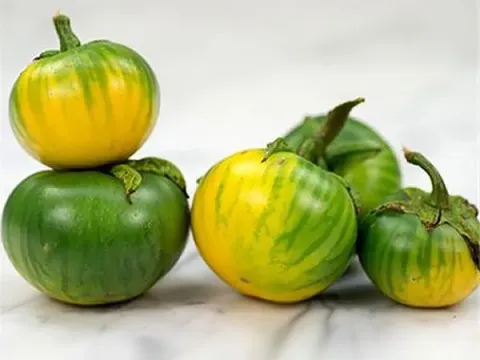
African eggplant
Solanum macrocarpon
Solanum macrocarpon, commonly known as the African eggplant, is a perennial herbaceous plant belonging to the Solanaceae family. In temperate climates, it is typically grown as an annual crop, requiring a seedling stage to ensure a full development cycle before the frost.
What the section contains
African eggplant
Seeds should be sown indoors 8–10 weeks before the expected last frost date. Pre-treatment of seeds, such as soaking in growth stimulants, can significantly improve germination rates and uniformity of the crop.
The growing medium must be light, nutrient-rich, and well-drained, with a pH ranging from slightly acidic to neutral. Maintaining a temperature of +25°C to +28°C is optimal for effective germination and early sprout growth.
Pricking out seedlings is recommended once the first true leaves appear to prevent overcrowding. Ensuring high levels of light exposure is critical at this stage to avoid leggy stems and to promote robust bud development for later flowering.
Transplanting to the permanent growing site should only occur when temperatures are consistently warm. This crop is extremely sensitive to cold, so any sudden drop in temperature can severely stunt growth and development.
As a plant native to tropical regions of West Africa, it thrives under high temperature conditions. It prefers sunny, sheltered spots with minimal wind, receiving direct sunlight for the majority of the day to reach its full production potential.
The African eggplant grows best in sandy loam or loamy soils rich in organic matter. Proper drainage is a vital requirement, as its root system is prone to fungal rot if water remains stagnant in the root zone for too long.
Irrigation should be consistent, especially during the flowering and fruit-setting stages. Avoiding overhead watering is recommended to minimize leaf moisture, which can otherwise invite fungal pathogens to colonize the foliage.
Fertilization with a balanced mix of nitrogen, phosphorus, and potassium is beneficial. However, nitrogen levels should be reduced after the onset of flowering to prevent the plant from focusing exclusively on vegetative growth at the expense of fruit production.
In intensive cultivation systems, using mulch is highly effective for moisture retention and weed control, ensuring the plant can focus its energy on fruit development rather than competition with weeds.
Yield capacity is highly dependent on environmental conditions and the specific variety planted. In ideal settings, the plant branches extensively, allowing for a higher number of fruit sets and potentially greater overall harvests per plant.
Both fruits and young leaves are edible and widely used in traditional African culinary practices for their nutritional value. Leaf harvests can be quite productive, providing multiple cuttings throughout the growing season from a single plant.
Fruits change color from green to yellow or orange as they mature. Regular harvesting of fruits in the technical maturity stage stimulates the plant to continue producing new ovaries, thereby extending the productive period of the plant.
In tropical areas, this species can produce fruit year-round, whereas in cooler climates, the harvest season is strictly dictated by the length of the warm summer window. Proper management can help extend the production time in northern regions.
Since the fruits have a relatively short shelf life, they should be consumed or processed shortly after harvesting. This limits their suitability for long-distance export but makes them an excellent addition to local market gardens.
Like many members of the Solanaceae family, the African eggplant is susceptible to common pests and diseases. Late blight, early blight, and various viral mosaic diseases transmitted by aphids or contaminated tools are the primary concerns.
Major insect pests include the Colorado potato beetle, spider mites, and whiteflies. In greenhouse settings, thrips can cause significant cosmetic and physiological damage, quickly diminishing the market value of the harvest.
Prevention is the best strategy. Strict crop rotation is mandatory; avoid planting in soil previously occupied by other nightshades for at least 3–4 years to prevent the buildup of soil-borne pathogens and pests.
If an infestation occurs, biological control agents or systemic insecticides may be used, provided that the required pre-harvest intervals are strictly followed to ensure food safety for the end consumer.
Sanitation at the end of the season is critical. Removing and destroying all plant debris helps disrupt the life cycles of pathogens and insects, significantly reducing the pressure on future plantings in the vicinity.
Harvesting begins at the stage of technical maturity, when the fruits reach their desired size and possess a firm, smooth skin. Overmature fruits may develop a bitter flavor and lose their desirable texture, making them less suitable for consumption.
Leaves are gathered selectively as needed, starting from the lower branches to allow for continued upward growth. This manual harvesting approach allows the plant to remain productive for a longer time throughout the season.
It is best to harvest fruits by cutting them with sharp shears or a knife, leaving a small portion of the stalk attached. Pulling the fruits by hand can damage the plant and create entry points for secondary infections.
Harvesting in the early morning is ideal after the dew has evaporated. Because the fruits have high respiration rates, they should be stored in a cool, well-ventilated area and used as quickly as possible to maintain their fresh quality.
Once the season concludes, all remaining plant biomass should be removed and composted or burned, especially if there were signs of disease, to prevent any carry-over of pathogens for the following growing season.