
Nicotiana arentsii
Nicotiana arentsii
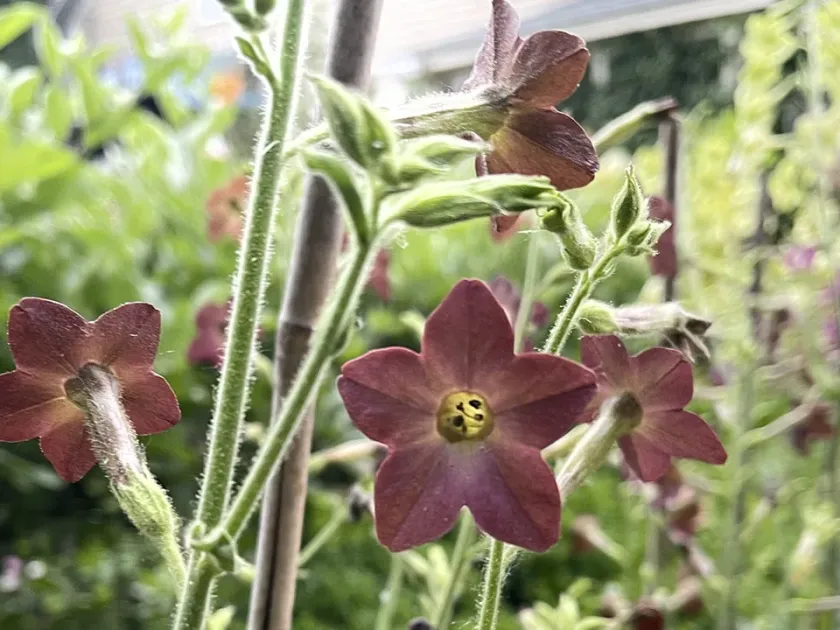
Description
Sowing dates
Nicotiana arentsii is an amphidiploid species within the Solanaceae family, naturally occurring from the hybridization of Nicotiana undulata and Nicotiana wigandioides.
Given its native high-altitude habitat, seedlings require a carefully controlled environment, typically starting in a greenhouse during early spring to mimic optimal conditions.
Seeds are known to be photosensitive, meaning they require adequate light exposure during the germination phase to break dormancy effectively.
Transplanting into individual pots should occur once the first two true leaves have developed, ensuring minimal root disturbance to support healthy further growth.
Field transplantation must be delayed until all risks of frost have passed, as the plant is sensitive to cold stress during its establishment phase.
Growing requirements
The species performs best in well-draining, sandy-loam soils with a neutral pH level, which helps prevent root rot common in denser soil types.
It demands high light intensity, making it unsuitable for shaded areas; full sun exposure is critical for the plant to thrive and complete its developmental cycle.
While adapted to harsh climates, the plant requires consistent but moderate moisture, avoiding waterlogging which can lead to fungal pathogens.
Ideal ambient temperatures for growth range between 20°C and 25°C, with protection from extreme heat fluctuations being advisable for consistent development.
Regular maintenance, including shallow cultivation of the topsoil, promotes proper aeration and prevents the growth of surrounding weeds that compete for resources.
Yield
Nicotiana arentsii is not utilized for industrial tobacco production due to its low leaf biomass and specific chemical profile that differs from Nicotiana tabacum.
Its primary agricultural value lies in scientific research and plant breeding, where it serves as a genetic resource for disease resistance traits.
The production of seeds is the main harvest objective in professional nurseries and research centers focused on the conservation of rare wild species.
While not a commercial crop, its unique phytochemical properties provide a niche interest for pharmaceutical studies and alkaloid research.
Yield metrics for this species are evaluated based on seed viability and genetic purity rather than traditional dry leaf weight measurements.
Main diseases and pests
The species is susceptible to common solanaceous diseases, specifically those caused by over-irrigation such as Pythium and various wilts.
Insects like aphids and spider mites are frequent threats, potentially causing severe damage to the foliage and stunted growth if left unmanaged.
Viral infections, including Tobacco Mosaic Virus (TMV), pose a high risk, necessitating strict adherence to sanitary protocols and plant protection standards.
Proactive monitoring of the leaf underside and surrounding soil is essential to detect pest infestations before they spread to the entire crop.
- Use of crop rotation to break pathogen life cycles.
- Application of sustainable pest control methods such as insecticidal soaps.
- Physical barriers to prevent the introduction of viral vectors into the field.
Harvesting
Seed harvesting is conducted when the seed capsules have turned brown and reached the final stage of maturity, signaling the end of the reproductive cycle.
After harvest, seeds must be thoroughly air-dried in a climate-controlled environment to prevent moisture accumulation that promotes fungal growth.
For scientific purposes, leaf samples are collected at the peak of the flowering stage, ensuring consistency in the study of its secondary metabolites.
Immediate post-harvest processing involves rapid drying to stabilize the chemical integrity of the plant tissues for future lab analysis.
Long-term storage of seed materials is best achieved in cold, dry, and dark conditions using sealed containers to ensure multi-year shelf life and viability.