
Woolly mullein
Verbascum eriophorum
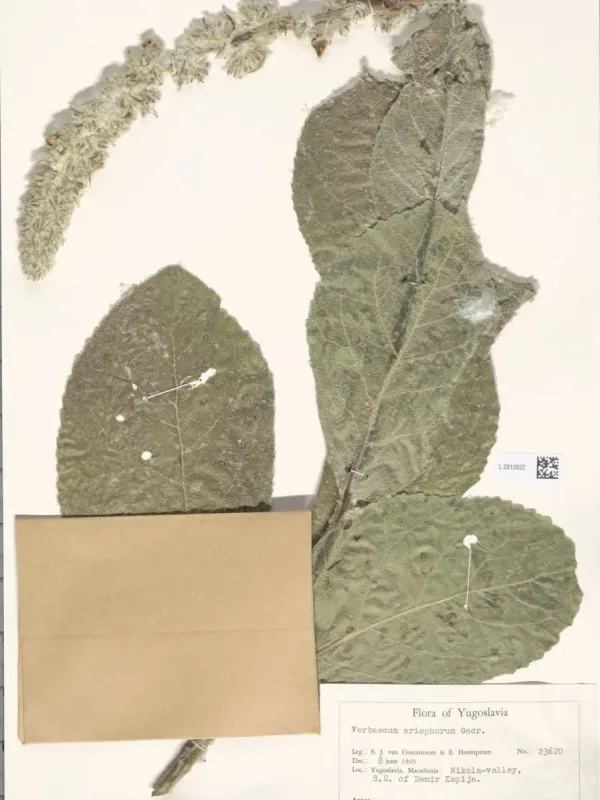
Description
Sowing dates
Sowing Woolly mullein is typically done in the spring once soil temperatures reach 10-12 degrees Celsius. Alternatively, winter sowing is possible, as it allows seeds to undergo natural stratification, leading to earlier and more vigorous germination in the following season.
The seeds are extremely small; therefore, they should be sown at a shallow depth of no more than 0.5 to 1 centimeter. Mixing seeds with dry sand is a common technique to ensure an even distribution across the sowing area.
For commercial cultivation, row spacing should be maintained between 45 and 60 centimeters. This provides necessary space for air circulation and allows for easy mechanical weeding and inter-row cultivation as the plants grow.
Seedlings usually emerge within 14 to 21 days after sowing. The plant exhibits slow initial growth, developing a basal rosette of leaves, which makes early-season weed management critical to prevent competition for nutrients.
The optimal plant density for high-quality production is approximately 8 to 10 plants per square meter. This spacing ensures that each plant receives sufficient resources for optimal vegetative development and flower production.
Growing requirements
Woolly mullein is a light-loving herbaceous plant belonging to the Scrophulariaceae family. It thrives best in open, sunny locations where it receives maximum light exposure throughout the day, which is essential for its development.
The crop prefers light, sandy, or loamy soils with a neutral pH. It does not tolerate waterlogged areas or heavy clay soils, as these conditions lead to poor root development and susceptibility to various root diseases.
The plant is highly drought-tolerant due to the dense hair-like trichomes (pubescence) on its leaves, which minimize transpiration. However, consistent moisture during the flower stalk formation stage will significantly increase overall biomass and yield.
Incorporating organic fertilizers into the soil prior to sowing provides the necessary nutrients for establishment. Potassium is particularly important for this species, as it contributes to plant vigor and resistance to environmental stress.
As a biennial species, the plant requires proper site selection to avoid winter kill. In colder climates, ensuring that the soil is well-drained during the winter months is crucial to prevent crown rot and plant mortality.
Yield
The yield of Woolly mullein depends heavily on the timing and methodology of the harvest. The primary objective is to collect flowers, which must be harvested during their peak blooming period to ensure maximum concentration of bioactive compounds.
Harvesting should be performed daily in dry weather conditions, once the morning dew has evaporated. Wet flowers are prone to immediate spoilage and color degradation, rendering the final product unsuitable for market.
The average yield for dried flowers can range from 300 to 600 kilograms per hectare, depending on soil fertility, moisture levels, and the intensity of the cultivation practices employed during the growing season.
For seed production, yields can reach 150 to 200 kilograms per hectare. Harvesting should commence when the seed capsules begin to brown but before they naturally dehisce and release their contents into the field.
Leaf production is also possible, with harvesting occurring before the plant shifts its energy toward developing the central flower stalk. While the economic value is generally lower than flowers, leaves contribute significantly to total dry weight output.
Main diseases and pests
Woolly mullein is relatively resilient, but it is susceptible to powdery mildew under conditions of high humidity and poor ventilation. This fungal disease creates a white, dusty film on leaves, reducing the plant's photosynthetic capacity.
Pests such as certain moth larvae and beetles can consume the foliage and developing buds. While these pests usually do not cause total crop failure, they can significantly lower the quality of the harvested flower material.
Root rot remains a major threat, particularly in fields with poor drainage. Once established, this condition leads to rapid wilting and plant death, making preventive management of soil water a primary agricultural goal.
A strict crop rotation schedule is essential to manage soil-borne pathogens. Re-planting mullein on the same plot should be avoided for at least three to four years to break the lifecycle of persistent pests and diseases.
Aphids may occasionally infest flower stalks during the budding phase. While direct damage is often minor, they act as vectors for viruses that can weaken the entire plantation, necessitating monitoring and early intervention.
Harvesting
Harvesting Woolly mullein is a manual, labor-intensive process due to the sequential flowering pattern along the spike. Flowers open gradually from the base upward, requiring multiple harvesting passes across the field.
Post-harvest, the material must be moved to the drying facility without delay. Industrial dryers operating at 40-50 degrees Celsius are ideal to quickly remove moisture while preserving the medicinal integrity and natural pigments of the petals.
The drying environment must be well-ventilated and shielded from direct sunlight. Exposure to UV rays causes the vibrant yellow color to fade to brown, which is a key indicator of poor-quality or improperly stored herbal raw material.
Once dried, the batch is sorted to remove debris, broken stems, or discolored petals. A high-quality final product will retain its characteristic honey-like fragrance and consistent, uniform color throughout the batch.
Storage should take place in light-proof, moisture-resistant containers stored in a cool, dark room. This prevents moisture absorption and oxidation, ensuring that the shelf life of the herb is maximized for commercial distribution.