
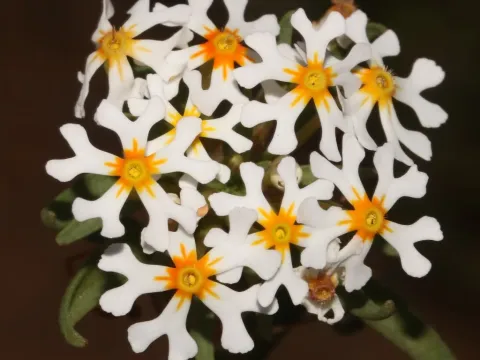
Zaluzianskya
Zaluzianskya F. W. Schmidt
Sowing Zaluzianskya seeds for seedlings is recommended in March or early April, using a light, well-draining substrate. Seeds should be sown on the surface because they require light to germinate, covered only lightly with vermiculite.
What the section contains

Zaluzianskya
Plants are transplanted into open ground only after the risk of frost has passed, usually at the end of May. The optimal temperature for seed germination is 18–20 degrees Celsius.
When sowing directly into the soil (in regions with a warm climate), choose well-lit areas. It is important to maintain a spacing of about 20–25 centimeters between plants to ensure proper air circulation.
To speed up germination, cover the containers with clear plastic or glass, maintaining high air humidity. Pricking out should be done when two pairs of true leaves appear, being careful not to damage the root system.
The flowering time of Zaluzianskya depends on the sowing time, but with proper agricultural practices, the plant blooms from June until the first autumn cold spells.
Zaluzianskya belongs to the Scrophulariaceae family and is native to South Africa. This plant requires maximum sunlight for full flowering and the formation of dense mounds.
The crop prefers light, sandy or sandy-loam soils with a neutral or slightly acidic reaction. An important condition is the absence of water stagnation, as the root system is extremely sensitive to waterlogging.
During the active growing season, Zaluzianskya needs moderate but regular watering. In hot summer periods, the soil should remain slightly moist but not swampy to prevent root rot.
The plant responds well to the application of complex mineral fertilizers with low nitrogen content to stimulate flowering rather than excessive foliage growth. Fertilizing is carried out once every three to four weeks.
One of the unique features of Zaluzianskya is its night-time flowering: the petals open at dusk, releasing a pleasant, subtle fragrance reminiscent of vanilla or honey.
Excessive air and soil humidity pose the main threat to the plant, triggering the development of fungal diseases such as gray mold and root rot.
Pests rarely attack Zaluzianskya significantly; however, under unfavorable conditions, spider mites may appear. In such cases, broad-spectrum insecticides should be used.
Water stagnation around the root zone often leads to rapid wilting of the plant. To prevent diseases, it is essential to provide a quality drainage layer when planting in containers.
The plant does not tolerate proximity to tall crops that create thick shade, which can also become a risk factor for the development of fungal infections.
- Ensuring good ventilation of the plot.
- Monitoring the moisture level of the substrate.
- Timely removal of withered flower stalks.