
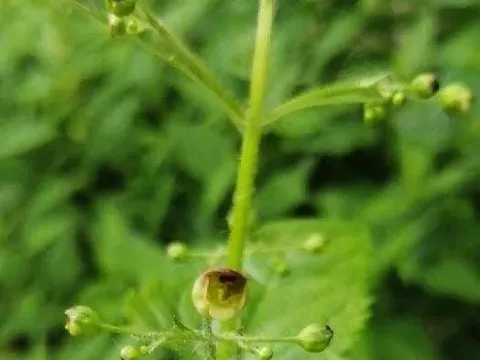
Figwort
Scrophularia nodosa
Figwort (Scrophularia nodosa) is a perennial herbaceous plant belonging to the Scrophulariaceae family, native to temperate regions across the Northern Hemisphere.
What the section contains
Figwort
The crop thrives in fertile, moist, and well-drained soils, typically requiring a neutral or slightly alkaline pH to reach its maximum vegetative potential.
It prefers partial shade and is commonly found in damp woodland environments, making it an excellent candidate for cultivation in sheltered agricultural plots.
Agronomic management requires careful moisture control, as the plant suffers from both severe drought and excessive soil compaction in heavy clay areas.
Beyond its botanical value, figwort is commercially farmed for its secondary metabolites, particularly iridoids and alkaloids, which are essential for pharmaceutical applications.
Leaf beetles represent the primary pest risk for Scrophularia nodosa, causing significant damage to the foliage during the summer months.
Fungal infections, particularly rusts and powdery mildew, are common during periods of high humidity and poor air circulation within the field.
Root rot becomes a critical threat when the soil drainage system fails, leading to rapid decay of the characteristic knotted rhizomes.
Aphids occasionally colonize the terminal shoots, hindering plant growth and affecting the biochemical development of the floral parts.
Integrated pest management strategies are crucial for maintaining the medicinal quality of the harvest and ensuring sustainable yields.