
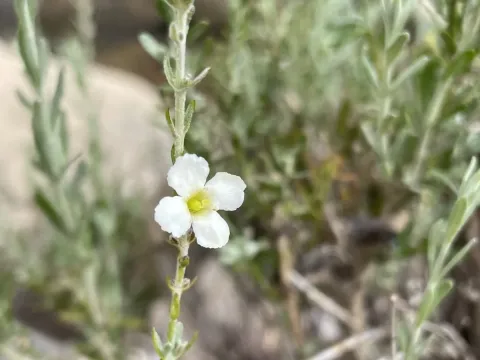
Gomphostigma virgatum
Gomphostigma virgatum
Gomphostigma virgatum, commonly known as the water bush, belongs to the Scrophulariaceae family and is native to the riparian habitats of Southern Africa, where it thrives along riverbeds and streams.
What the section contains
Gomphostigma virgatum
This species requires a full sun exposure to maintain its characteristic upright growth habit and to promote dense flowering. It performs best in garden settings where it receives at least six hours of direct sunlight daily.
Regarding soil, it prefers moist, well-draining conditions. While it is adapted to riverbank environments, it is quite versatile and can adjust to various garden soil textures provided they are not excessively compacted or waterlogged.
The climate requirements include moderate temperatures. It is not fully frost-hardy and should be sheltered or brought indoors in regions experiencing hard freezes, as it is native to warmer temperate zones.
Agricultural management entails consistent irrigation during the peak growing season, regular pruning to encourage fresh growth, and occasional fertilization to ensure vibrant foliage and long-lasting flower displays.
Root rot is the primary threat to Gomphostigma virgatum, often caused by poorly drained substrates. Ensuring the plant is situated in an area with adequate aeration is crucial for its long-term survival.
Fungal infections such as powdery mildew may develop if the plant is kept in overly humid conditions with poor air circulation. Proper spacing between individual plants is a key preventive measure.
Pests like aphids and spider mites are known to infest the plant, particularly when stressed by adverse environmental conditions. Early detection and treatment with insecticidal soaps are highly effective.
Leaf spot diseases can sometimes occur during rainy periods, necessitating the removal of affected foliage to prevent the spread of spores throughout the rest of the shrub.
Maintaining high horticultural hygiene, including the removal of dead or decaying plant material from the base of the shrub, significantly reduces the likelihood of severe pest or disease outbreaks.