
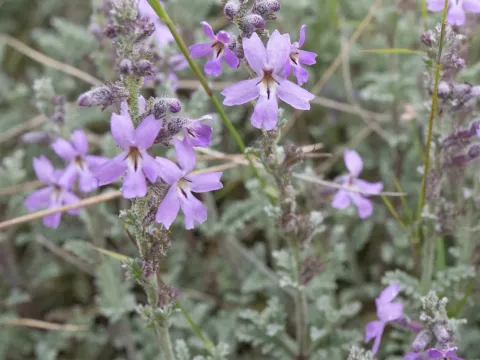
Jamesbrittenia
Jamesbrittenia
Jamesbrittenia is a genus of flowering plants belonging to the Scrophulariaceae family, native primarily to southern Africa. Known for their profuse blooming, these plants are popular in ornamental horticulture for their vibrant flowers and spreading or trailing habit, making them excellent choices for containers.
What the section contains

Jamesbrittenia
The plant thrives in full sunlight, which is essential for maintaining dense foliage and continuous flower production. In regions with cold winters, Jamesbrittenia is typically cultivated as an annual or a seasonal tender perennial because it is not frost-tolerant and requires protection when temperatures drop.
Regarding soil requirements, this plant demands a well-draining, nutrient-rich potting medium. Excess moisture around the roots must be avoided, as Jamesbrittenia is highly susceptible to root rot in waterlogged conditions; therefore, incorporating perlite or sand into the substrate is often recommended.
Agrotechnical maintenance for Jamesbrittenia includes regular deadheading, which encourages the plant to produce more buds throughout the growing season. This practice not only enhances the aesthetic appeal of the plant but also promotes a healthier and more robust structural development of the stems.
Due to its versatile growth form, Jamesbrittenia is widely utilized in hanging baskets, window boxes, and as a groundcover in rock gardens. Its drought-tolerant nature, once established, allows it to perform well in warm climates, provided that regular but controlled watering is maintained.
Common threats to Jamesbrittenia include fungal infections such as powdery mildew and grey mold, particularly in environments with high humidity and poor air circulation. Proper spacing between plants is a crucial preventive measure to reduce the incidence of these diseases.
Pest issues often involve spider mites and whiteflies, which tend to congregate on the undersides of the leaves. Regular inspection and the application of horticultural soaps or specific miticides help control these pests and keep the foliage vibrant and free from damage.