
Salvia-leaved buddleia
Buddleja salviifolia
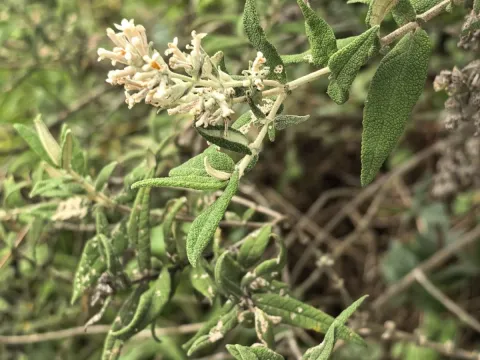
The Salvia-leaved buddleia (Buddleja salviifolia) is an evergreen or semi-evergreen shrub belonging to the Scrophulariaceae family. It is distinct due to its wrinkled, sage-like leaves and fragrant, honey-scented flower panicles that bloom in terminal clusters.
What the section contains
Salvia-leaved buddleia
Native to Southern Africa, this species thrives in climates where it receives ample sunlight. In professional landscaping, it is used for its rapid growth rate and ability to adapt to various garden styles, provided it is sheltered from harsh winter winds.
Cultivation requirements necessitate well-drained, nutrient-rich soil. While the plant is drought-tolerant once established, it prefers consistent moisture during the blooming season. The optimal soil pH range is slightly acidic to neutral for the best nutrient uptake.
Agronomic practices focus heavily on annual pruning to ensure vigorous flowering. Pruning should be executed early in the spring, which encourages the development of new flowering wood. Mulching around the base helps retain moisture and suppress weed growth.
Economically and ornamentally, this plant serves as a vital component of nectar-rich gardens, supporting local biodiversity. It is widely valued by nurseries for its hardiness and long-lasting floral display, making it a sustainable choice for urban planting.
The primary pests affecting Buddleja salviifolia include spider mites and whiteflies, which tend to infest the plant during hot, dry spells. Keeping the foliage healthy through proper hydration is the first line of defense against these common pests.
Fungal issues, such as root rot, often occur in poorly drained substrates. Growers should prioritize soil aeration and avoid overhead watering to prevent the development of powdery mildew, which can diminish the aesthetic value of the shrub during the peak season.