
Purple Mullein
Verbascum purpureum
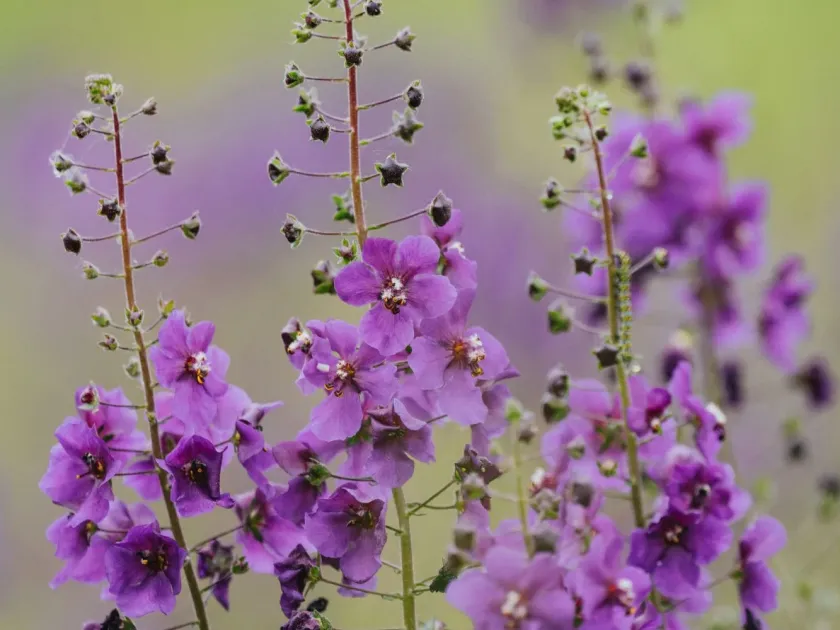
Description
Sowing dates
Purple mullein seeds are typically sown in the spring, during April or May, once the soil has warmed up to stable positive temperatures. Alternatively, autumn sowing in October is practiced, allowing the seeds to undergo natural stratification, which leads to earlier germination in the following season.
Due to the very fine nature of the seeds, they should be sown at a shallow depth of no more than 0.5–1 cm. For nursery propagation, seeds are sown in March into a light substrate with sufficient light exposure to prevent etiolation of the seedlings.
Once seedlings emerge, thinning is required to maintain a spacing of 30 to 50 cm between plants. This space is crucial for the proper development of the rosette of basal leaves and the eventual formation of healthy, sturdy flower spikes.
The plant self-seeds readily, which means that in commercial cultivation, monitoring plant density is essential. Controlling the spacing within rows, ideally between 45-60 cm, ensures ease of maintenance and promotes better air circulation among the plants.
Given the taproot system, direct seeding to the permanent location is preferred. If transplanting is necessary, it must be performed at a young stage to minimize root shock, as mature plants do not transplant well and may suffer stunted growth.
Growing requirements
As a member of the Scrophulariaceae family, purple mullein thrives in full sun exposure. Shade should be avoided entirely, as low light levels will cause the plants to grow leggy, reduce flower production, and diminish the intensity of their purple blooms.
Soil requirements are modest; the plant prefers well-drained sandy or loamy soils with a neutral to slightly alkaline pH. Proper drainage is the most critical factor, as stagnant water in the root zone can quickly lead to decay and plant loss.
Purple mullein is highly drought-tolerant, thanks to the thick pubescence on its leaves which minimizes moisture loss. This adaptation makes it an excellent choice for regions experiencing irregular rainfall or intense summer heat.
While the plant is hardy, it benefits from moderate applications of balanced mineral fertilizers during the active growing season. Excess nitrogen should be avoided to prevent lush foliage at the expense of flowering performance.
The plant is well-adapted to temperate climates and generally survives winter cold successfully. In harsh, snowless winters, some light mulching around the base can help protect the crown and ensure vigorous growth upon the arrival of spring.
Main diseases and pests
Fungal diseases, including powdery mildew and various leaf spot pathogens, are the primary health threats. These conditions are exacerbated by high humidity levels and poor airflow, making plant spacing a critical management component.
Insect pests such as cutworms and leaf beetles can cause significant damage to the foliage during the growing season. In hot and arid conditions, spider mites may also pose a risk, feeding on the undersides of the leaves and causing chlorosis.
Integrated pest management strategies should emphasize preventive measures, such as weed control and avoiding overhead irrigation. Keeping the planting area clean and maintaining proper plant density are the most effective ways to reduce disease pressure.
Chemical intervention should be considered a last resort, particularly if the plants are intended for medicinal use. When necessary, the use of biological control agents or selective insecticides is recommended to protect beneficial pollinators and minimize environmental impact.
Root rot remains the most serious threat when soil drainage is poor. Ensuring the planting site has adequate permeability is essential for long-term health and preventing the development of soil-borne pathogens that thrive in compacted or waterlogged soils.