
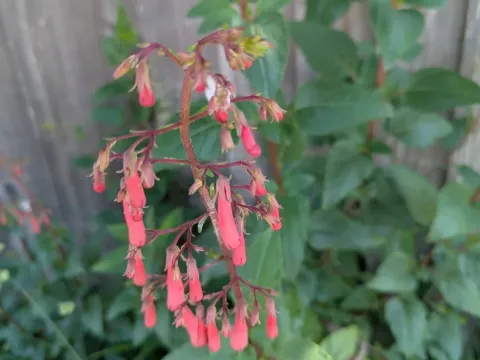
Phygelius
Phygelius E. Mey.
Propagation of Phygelius in temperate climates is most often carried out by seeds or cuttings. Seeds are sown in containers in early spring, during March or April, to obtain high-quality seedlings.
What the section contains


Phygelius
For successful germination, the seeds require temperatures around 18–20 degrees Celsius and regular moisture in the substrate. Once the first true leaves appear, the seedlings are pricked out into individual pots.
Transplanting seedlings into open ground is performed only after the threat of night frost has completely passed. This usually happens in late May or early June, when the soil is sufficiently warmed.
For vegetative propagation, semi-hardwood cuttings are used, which are harvested in the summer. They are rooted in a mixture of peat and sand under a plastic cover to maintain constant humidity.
A crucial factor during sowing is ensuring good drainage, as water stagnation at the seed germination stage inevitably leads to loss due to fungal rot.
Phygelius, belonging to the Scrophulariaceae family, is a southern plant originating from the Cape Province of South Africa. In the wild, it prefers sunny locations with moderate moisture levels.
For active growth, the crop requires fertile, well-drained soil with a neutral or slightly acidic reaction. The plant is extremely sensitive to heavy clay soils, where roots can easily suffer from waterlogging.
The culture has high lighting requirements: for full flowering, it needs at least six hours of direct sunlight per day. In partial shade, the stems become leggy, and the intensity of flowering decreases sharply.
In regions with cold winters, the plant requires mandatory covering or lifting of the rhizomes, as it has limited frost resistance and can only withstand brief drops in temperature.
Regular fertilization with complex fertilizers during the growing season ensures prolonged flowering and maintenance of the vibrant coloration of the tubular inflorescences characteristic of this genus.
The main pests affecting Phygelius in garden culture are aphids and spider mites. These insects feed on the cell sap of young shoots, causing deformation and stunted development.
Under conditions of excessive soil moisture, the plant becomes vulnerable to various fungal infections, including root rot and powdery mildew. Diseases spread rapidly when there is poor air circulation.
To combat pests, systemic insecticides or biological treatment methods are applied. Prevention consists of removing infected parts of the plant and adhering to a strict watering regimen.
Bacterial damage can occur as a result of damage to the root system during weeding or transplanting. It is important to handle the plant with care to avoid traumatizing the underground part of the bush.
Preventive treatment with fungicides at the beginning of the season helps to reduce the risk of fungal diseases during periods of prolonged rain, which are common in many gardening regions.