
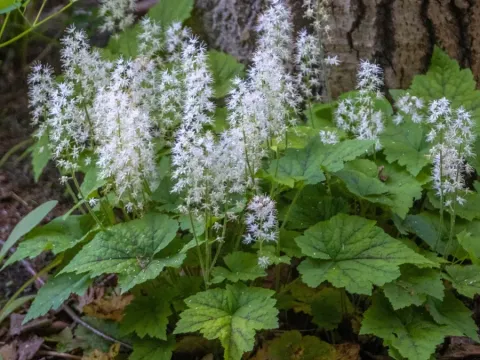
Tiarella hybrid
Tiarella hybrids
Tiarella hybrids belong to the Saxifragaceae family and are highly valued for their delicate foliage and flowering spikes in shaded gardens. Propagation is primarily achieved through division of the rootstock, which is the most reliable method for maintaining specific hybrid traits.
What the section contains
Tiarella hybrid
The best time for planting and dividing established clumps is during the early spring or late summer. During these periods, the soil moisture levels are optimal for rapid root establishment before the onset of extreme weather.
When planting, spacing should be determined by the specific hybrid variety, as many types spread quickly via stolons. Aim for approximately 7–9 plants per square meter to create a dense, weed-suppressing groundcover effect.
While seed propagation is possible, it is not recommended for hybrid Tiarella due to genetic segregation, which results in offspring that do not match the parent plant. If seeds must be used, they require a cold stratification period to break dormancy.
After transplanting, keep the soil consistently moist until the plants are fully established. A layer of organic mulch, such as leaf mold, helps to retain soil moisture and improves the overall quality of the growing environment.
Tiarella hybrids thrive in partial to full shade, mimicking their natural woodland habitat. They should be shielded from direct, intense sunlight, which can quickly cause leaf scorch and dehydration of the plant tissue.
The ideal soil for Tiarella is humus-rich, well-draining, and slightly acidic. It is crucial to maintain a soil environment that stays consistently moist but never waterlogged to prevent root rot and other fungal pathogens.
Regarding climate, these plants are hardy but appreciate protection from harsh, drying winds. In colder climates, a covering of mulch or evergreen boughs provides essential insulation for the crown during freezing winter months.
Temperature management is key; Tiarella performs best in cool, humid conditions. During periods of heat stress, extra watering is necessary to prevent the leaves from drooping and losing their characteristic luster.
Occasional fertilization is beneficial for vigorous growth. A balanced, slow-release fertilizer applied in early spring usually suffices, though an extra dose of compost can be beneficial after the flowering season to support root development.
The primary threats to Tiarella hybrids include moisture-related diseases such as powdery mildew and root rot. These problems are often exacerbated by poor air circulation or overcrowding within the garden bed.
Slugs and snails are the most common pests, as they are attracted to the succulent, shade-loving foliage. Infestations are most severe in cool, wet seasons, causing significant cosmetic damage to the leaves.
Effective management begins with maintaining a clean garden environment. Removing dead leaves and thinning out overgrown clumps helps improve airflow and reduces the habitat for potential disease-causing organisms.
Chemical control for slugs may involve the use of iron phosphate-based baits, which are safer for garden wildlife than traditional options. Mechanical barriers, like copper tape or sharp gravel, can also deter slugs from reaching the foliage.
Regular inspection is essential for early detection of issues. By monitoring the plants closely, gardeners can address minor infestations or symptoms of disease before they spread to the entire patch of Tiarella.