
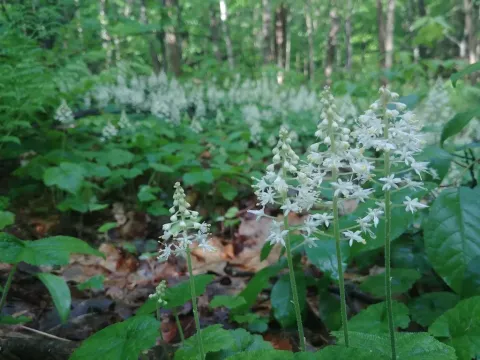
Tiarella
Tiarella L.
Tiarella (Tiarella L.) is a perennial herbaceous plant belonging to the Saxifragaceae family. In the wild, the culture is found primarily in the forest zones of North America and East Asia, where it prefers moist and shaded areas for optimal growth.
What the section contains


Tiarella
Botanically, the plant forms a compact clump with a basal rosette of attractive, deeply lobed leaves, which often display decorative dark markings along the veins. During the flowering period, typically occurring in the spring, the plant produces elegant, feathery flower spikes consisting of small white or pinkish blooms.
For successful development, Tiarella requires loose, humus-rich, and consistently moderately moist soil. The plant does not tolerate waterlogging well, so when planting in heavy clay soils, it is necessary to provide quality drainage to prevent the root system from rotting.
Optimal conditions for Tiarella include partial or full shade, as direct sunlight during the hottest hours of the day can cause scorching of the delicate leaf blades. In cooler climates, the plant can tolerate more exposed positions provided that the soil moisture levels are maintained.
In landscaping, Tiarella is highly valued as a groundcover for decorating shaded areas, creating a lower layer in mixed borders, and landscaping around tree trunks. Its ability to spread quickly via stolons makes it an effective plant for suppressing weeds in the garden.
Tiarella is characterized by high resistance to diseases; however, improper cultivation techniques and water stagnation can lead to root rot caused by pathogenic fungi. It is crucial to avoid overwatering and overly dense planting, which hinder natural air circulation around the foliage.
Among the pests found on Tiarella, slugs and snails are the most common, as they feed on the young, succulent leaves, leaving behind distinctive damage. For protection, it is recommended to regularly inspect the area and utilize physical barrier methods.
Occasionally, under dry air conditions or temperature fluctuations, the plant may suffer from spider mite infestations, which extract sap from the leaves, causing discoloration and premature wilting. Regular watering and overhead misting serve as effective preventive measures.
To maintain the plant's health, it is necessary to promptly remove dead foliage after winter and perform sanitary pruning of the flower stalks once the active blooming period has concluded. This helps prevent the accumulation of pathogens in plant debris.
The use of insecticides and fungicides is justified only in cases of severe pest infestation or fungal disease outbreaks. In most cases, proper adherence to soil management and general maintenance practices is sufficient to keep the plants thriving.