
Tufted saxifrage
Saxifraga cespitosa
Description
Growing requirements
Tufted saxifrage (Saxifraga cespitosa) belongs to the Saxifragaceae family. It is a perennial herb native to arctic and alpine regions across the Northern Hemisphere, known for its ability to thrive in challenging, rocky environments.
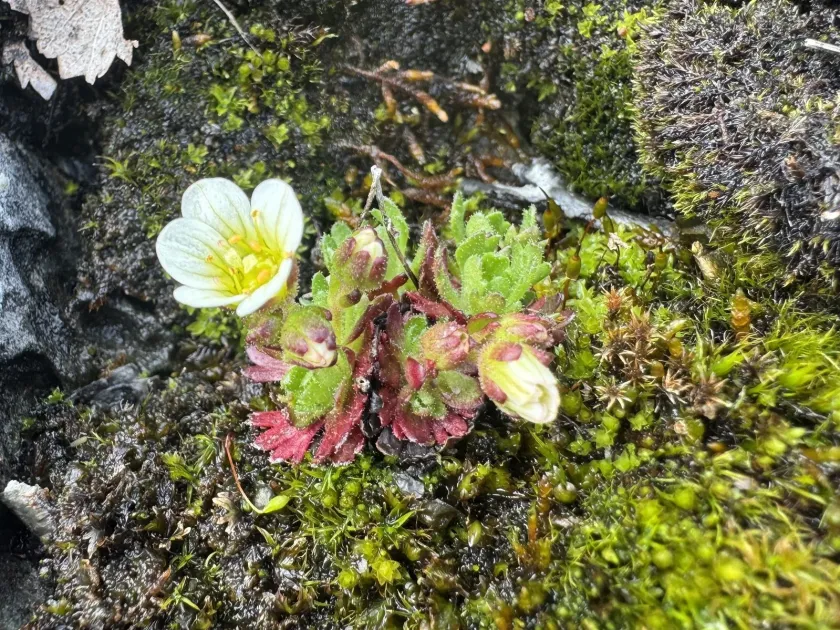
The plant grows in dense, cushion-like mats. Its leaves are typically three-lobed or deeply divided and feature glandular hairs, which serve as a physiological adaptation to harsh climates and moisture retention.
Cultivation requirements involve well-drained, gritty soil. Because of its natural habitat, Saxifraga cespitosa requires excellent drainage to prevent crown rot, making it an ideal candidate for rock gardens and crevices.
The plant prefers sunny locations but benefits from partial shade in extremely hot climates to avoid leaf scorch. It is highly winter-hardy and generally prefers cooler temperatures, reflecting its arctic ancestry.
In landscaping, it is highly valued for its ground-covering properties. The mats created by the plant remain green throughout the season and produce small, white or yellowish flowers, contributing to the aesthetics of alpine gardens.
Main diseases and pests
Root rot is the most common threat to tufted saxifrage, usually triggered by waterlogged conditions or poor air circulation within the leaf cushions. Preventing stagnant water is the primary defense strategy.
Pests such as aphids and spider mites can occasionally affect the growth, particularly in overcrowded conditions. Additionally, snails and slugs can cause physical damage to the leaves during damp periods.
To maintain plant health, it is essential to ensure that no water sits directly on the foliage. Mulching with fine gravel or crushed stone helps keep the leaves away from wet soil, significantly reducing disease incidence.
Regular maintenance, including the removal of dead foliage and surrounding weeds, helps maintain good airflow. In case of infestation, targeted applications of organic-friendly pesticides or insecticidal soaps are recommended.
Proper plant spacing during establishment allows the cushions to develop without trapping excessive humidity. This prevents the development of fungal patches and ensures long-term vigor for the tufted saxifrage.