
Tombea saxifrage
Saxifraga tombeanensis
Description
Growing requirements
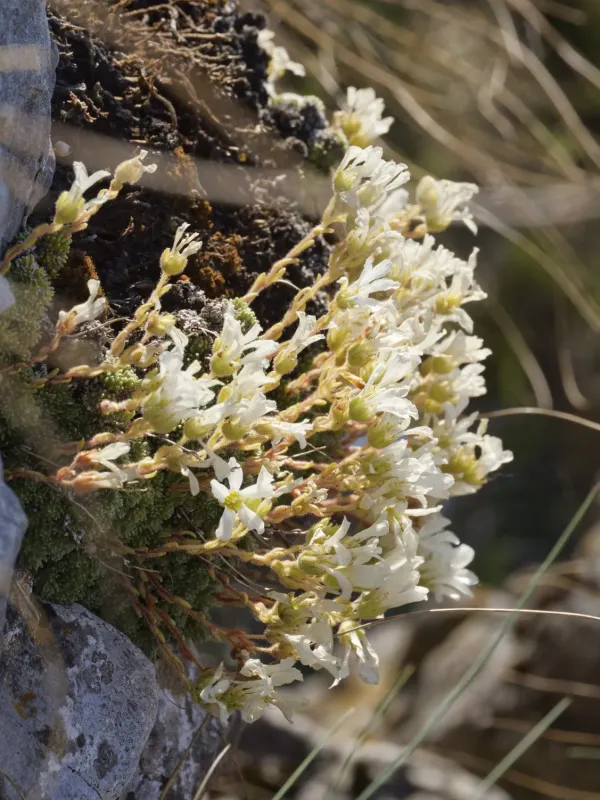
The Tombea saxifrage (Saxifraga tombeanensis) belongs to the Saxifragaceae family. This rare species is native to the limestone crevices of the Alps, specifically found in the Tombea region, exhibiting a high adaptation to mountain rocky habitats.
The plant forms dense, cushion-like rosettes of small, leathery leaves. A defining characteristic of the species is the encrustation of calcium carbonate along the leaf margins, which gives the plant a distinct, refined, and silvery aesthetic appearance.
For successful cultivation, the soil requirements must strictly mimic the alpine environment. The substrate should be highly inorganic, consisting primarily of limestone grit, gravel, and sand, ensuring rapid water drainage to prevent the crown from rotting.
This species requires high light intensity to maintain its compact growth form and health. However, in lower altitudes, providing shelter from the scorching midday sun is essential to prevent physiological stress and leaf scorching.
Cultivation is primarily ornamental, making it a prized specimen for alpine enthusiasts. It is best suited for rock gardens, crevice planting, or specialized troughs where it can be protected from moisture-retentive soils and competition from larger plants.
Main diseases and pests
The primary threat to the Tombea saxifrage is fungal root decay, which typically occurs due to poor drainage or overly frequent overhead watering that keeps the crown continuously wet.
During the winter months, moisture trapped around the foliage can lead to rotting. This requires covering the plant with a frame or ensuring excellent ventilation to allow the plant to dry out quickly after precipitation.
Pests such as spider mites may occur in protected environments like greenhouses, requiring careful monitoring of the leaf rosettes and the use of appropriate control measures when an infestation is detected.
Poor soil aeration can significantly weaken the root system, making the plant susceptible to opportunistic pathogens that thrive in compacted or acidic soil environments.
Maintaining a clean growing area by removing organic debris around the base of the plant is vital, as decaying organic matter attracts slugs and promotes the growth of unwanted molds.