
Taygetos saxifrage
Saxifraga taygetea
Description
Growing requirements
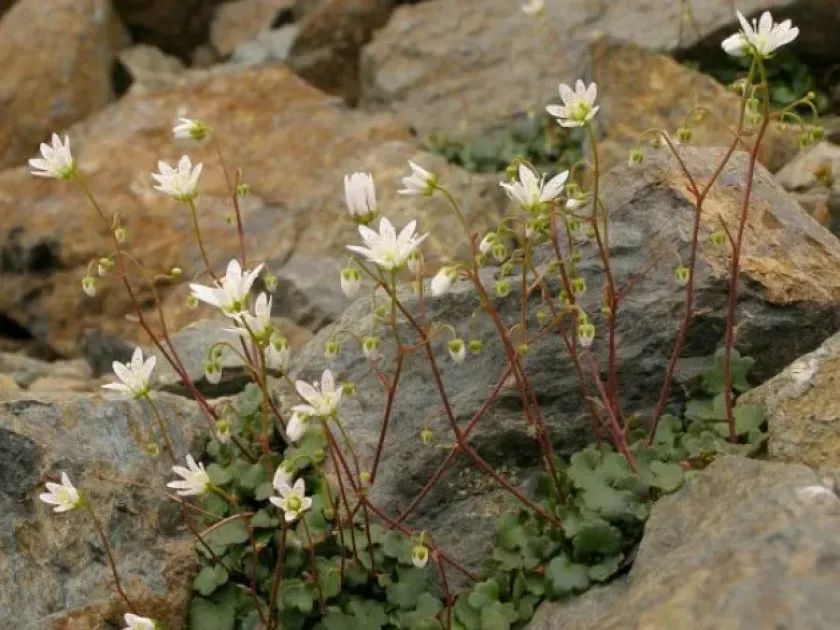
Taygetos saxifrage (Saxifraga taygetea) is a member of the Saxifragaceae family. This perennial species is native to the rocky, moist environments of the Taygetos mountains in Greece.
The cultivation of this plant requires a cool, semi-shaded environment. It thrives in locations that provide protection from the intense mid-day sun, mimicking its natural high-altitude habitat.
The ideal soil substrate for Saxifraga taygetea must be well-draining, consisting of a mix of loam and fine grit. Waterlogging is detrimental to the plant, so elevation or slopes are preferred.
Regarding climate, this plant is well-adapted to temperate regions with cool summers. It requires consistent moisture levels during the growing season but demands excellent drainage during winter to prevent root rot.
In landscaping, this species is primarily used as an ornamental plant for rock gardens and crevices. Its compact growth habit and delicate flowers make it a highly valued specimen for alpine-style horticulture.
Main diseases and pests
The most common disease affecting this crop is root rot, typically caused by waterlogged soil conditions or poor aeration within the root zone of the plant.
Powdery mildew can become an issue during periods of high humidity and poor air circulation. Implementing proper spacing between individual plants is essential to reduce the risk of fungal infections.
Slugs and snails are the primary pests that damage the foliage. These pests are particularly active during damp weather and can strip the leaves, necessitating manual removal or the use of protective barriers.
Aphids often target the flower stalks, causing stunted growth. While they are usually a minor nuisance, heavy infestations require treatment with insecticidal soaps or gentle botanical sprays.
Spider mites may occasionally occur during prolonged hot and dry spells, leading to foliage discoloration. Regular monitoring and misting can help deter these pests from establishing on the plant.