
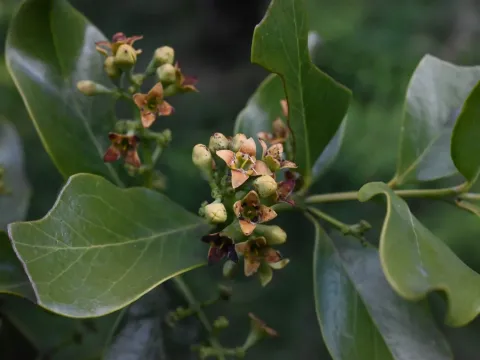
Santalum paniculatum
Santalum paniculatum
Propagation of Santalum paniculatum is a specialized process due to its nature as a hemi-parasitic plant. Seeds are sown in nurseries where each seedling is paired with a suitable host plant, as the sandalwood tree requires its root system to form haustoria to acquire nutrients.
What the section contains
Santalum paniculatum
Once seedlings reach a height of 30–50 cm, they are ready for transplanting. Successful establishment depends heavily on the presence of nitrogen-fixing host species, such as specific Acacia varieties, which support the tree throughout its long development cycle.
The ideal time for field planting is the onset of the rainy season. This allows the root system to adapt to the new soil conditions without excessive water stress, significantly increasing the survival rate of the young trees.
A planting density of 4–6 meters between rows is recommended to ensure proper air circulation and reduce the risk of humidity-related pathogens. Due to its slow growth, the plantation must be protected from strong winds during the early development stage.
Careful irrigation during the first two years is essential. While the tree is tropical, waterlogging must be avoided at all costs, as the roots are highly susceptible to rot when the soil becomes anaerobic.
Santalum paniculatum is native to the Hawaiian Islands and thrives in high-elevation tropical climates. It is typically found at altitudes between 600 and 2000 meters above sea level, where distinct diurnal temperature variations occur.
Well-drained soils, ideally of volcanic origin, are required for healthy development. The species cannot tolerate heavy clay or waterlogged soils, which lead to root health issues and inhibit the symbiotic relationship with host plants.
The species prefers full sunlight but benefits from the presence of host plants that provide moderate shade during the early stages of life. The ideal pH level of the soil ranges from 6.0 to 7.5, ensuring optimal nutrient uptake for both the sandalwood and its hosts.
Temperature stability is vital for consistent growth. The plant is sensitive to frost and extreme cold, making it unsuitable for cultivation in temperate climates unless grown within strictly controlled environments.
Maintenance involves providing organic soil amendments that benefit the entire plantation ecosystem. Supporting the health of the host trees is just as important as fertilizing the sandalwood itself, as the host provides the primary mineral support for the sandalwood.
The commercial value of Santalum paniculatum lies in the accumulation of santalol-rich oil within the heartwood. It is a long-term investment, with a maturity cycle typically lasting 30 to 50 years before the wood is ready for harvest.
Yield is measured by the quality and density of the heartwood rather than the overall biomass. Only mature trees that have developed a thick core of heartwood are commercially viable for essential oil extraction.
The essential oil is a highly prized ingredient in the perfume and pharmaceutical industries. Its chemical profile and fragrance strength depend on the slow growth rate of the tree, which concentrates the aromatic compounds over several decades.
While plantation management can influence growth rates, extreme artificial stimulation may reduce the oil quality. Maintaining a balance between natural growth conditions and silvicultural care is essential for achieving a premium product.
Harvesting involves the extraction of the entire tree. The wood is subsequently processed and subjected to steam distillation, a precise procedure that captures the essence used in high-end cosmetic formulations.
Herbivores such as feral pigs, goats, and deer pose the most significant threat to young plantations. They frequently damage the bark and tender stems, often causing the death of the sapling or leaving it vulnerable to infections.
Root pathogens represent a major risk, especially when soil management is poor. Fungal diseases can spread quickly through a plantation if irrigation is excessive or if the host plant ecosystem is disturbed.
Wood-boring insects can damage the developing trunk, significantly reducing the quality of the harvested timber. Regular monitoring and integrated pest management are necessary to prevent infestations from compromising the heartwood.
Invasive weed species compete with the sandalwood for sunlight and nutrients. If left unchecked, these weeds can outcompete the young trees, stifling their growth and weakening the symbiotic connection with their hosts.
Climate-induced drought and heat stress can lower the tree's natural defense mechanisms. In such conditions, trees are more prone to secondary infections, requiring vigilant monitoring and adaptive management strategies.