
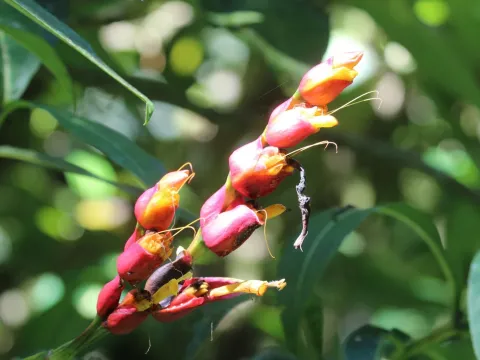
Sanchezia nobilis
Sanchezia nobilis
Sanchezia nobilis is a notable evergreen shrub belonging to the Acanthaceae family. Originally native to the tropical rainforests of Ecuador and Peru, this species is highly valued for its striking foliage, which features deep green leaves with contrasting bright yellow veins running along the midribs.
What the section contains
Sanchezia nobilis
Botanically, the plant is characterized by its square-shaped, reddish stems and large, opposite leaves. During the blooming season, it produces terminal spikes of tubular, bright yellow flowers, often subtended by colorful reddish-brown bracts, creating a vivid display typical of tropical vegetation.
To thrive in a controlled environment, Sanchezia nobilis requires a stable climate with temperatures ideally between 18°C and 25°C. It is intolerant of cold drafts and frost, making it suitable primarily for greenhouses, conservatories, or as a vibrant indoor plant in cooler geographic zones.
The preferred soil profile for this crop is a nutrient-rich, well-draining substrate with a slightly acidic to neutral pH level. It is essential to maintain consistent soil moisture throughout the growing season, while avoiding waterlogging, which can quickly lead to root decay and overall plant decline.
Cultural management involves regular maintenance of humidity levels, as the plant originates from high-moisture tropical habitats. Supplemental fertilization with balanced liquid fertilizers during the spring and summer months supports leaf coloration and encourages the production of its characteristic floral spikes.
The primary pests affecting Sanchezia nobilis include spider mites and scale insects, which tend to flourish in environments with low air humidity. Regular leaf inspections and the application of horticultural oils or soap sprays are effective methods for managing these common pest populations.
Fungal issues, such as root rot, often stem from overwatering or poorly aerated growing media. Practitioners should focus on proper drainage and avoiding water stagnation to prevent these pathogens from impacting the plant's health and structural integrity during the dormant season.