
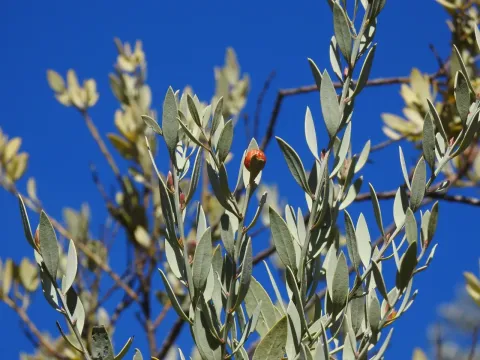
Osyris
Osyris
Osyris is a genus of evergreen shrubs and small trees belonging to the Santalaceae family. These plants are characterized as obligate root hemiparasites, meaning they possess specialized organs called haustoria that penetrate the roots of host plants to acquire essential water and mineral nutrients.
What the section contains


Osyris
The distribution of Osyris encompasses various regions, particularly the Mediterranean basin, parts of Africa, and Southern Asia. They are typical constituents of maquis shrublands, open woodlands, and rocky slopes where they have adapted to survive in challenging, nutrient-poor environments.
Climatic requirements for Osyris are geared toward warm and arid conditions. These plants are highly drought-tolerant, relying on their host plants to buffer against water scarcity, which allows them to thrive in regions where conventional crops or shrubs would struggle.
The preferred soil conditions are well-drained, often rocky or calcareous substrates. Proper drainage is critical for the health of Osyris, as waterlogged soil significantly increases the risk of root pathogens and limits the effectiveness of the hemiparasitic connection.
In terms of human use, some species are utilized in xeriscaping and landscape design for arid regions. Historically, certain parts of the plant have been used for traditional dye production or in regional herbal practices, though modern cultivation for commercial agriculture is virtually non-existent.
The primary health threats for Osyris include various fungal infections, most notably powdery mildew. These diseases often emerge when environmental conditions become unusually humid, disrupting the plant's natural resistance.
Pests such as aphids and leaf-eating beetles can cause significant damage to the foliage during the growth season. As the plant is a hemiparasite, its vigor is strictly linked to the health status of the host plant; therefore, any pest affecting the host indirectly threatens the Osyris.
Environmental degradation, including the removal of native host species, represents a severe threat to wild populations. Without a stable and diverse host community, Osyris cannot establish itself effectively in its habitat.
Chemical runoff and soil contamination are major concerns, as the plant's mechanism for nutrient uptake can also absorb harmful residues, which may lead to systemic toxicity within the shrub.
Management strategies should focus on maintaining a balanced ecosystem. Avoiding the overuse of broad-spectrum fungicides is recommended, as these can disrupt the delicate biological balance between the parasite and its host system.