
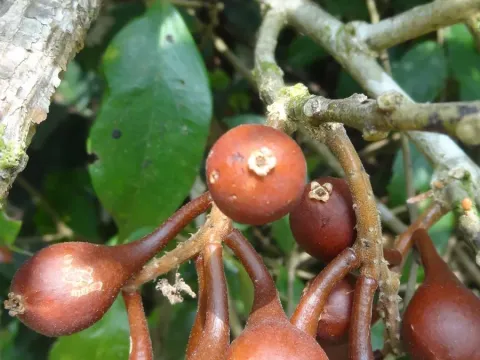
Scleropyrum
Scleropyrum
Scleropyrum is a genus of evergreen trees and shrubs belonging to the Santalaceae family. These plants are scientifically noted for their semi-parasitic behavior, which is a characteristic feature of many members within the sandalwood family.
What the section contains
Scleropyrum
The native habitat of Scleropyrum is primarily located in the tropical regions of Asia, including India, Sri Lanka, and Southeast Asia. These trees typically thrive in moist, shaded environments, occupying the understory or sub-canopy layers of tropical forests.
Climate requirements involve consistently high tropical temperatures and abundant rainfall throughout the year. The species lacks cold tolerance, making it strictly confined to frost-free tropical and subtropical zones.
Soil requirements for Scleropyrum include well-drained, nutrient-rich soils. While they prefer fertile substrates, adequate aeration is critical, as they are susceptible to root rot in waterlogged or swampy conditions.
Agricultural practice regarding this plant is complex due to its reliance on host plants to supplement nutrient intake. Successful cultivation requires a deep understanding of its parasitic relationship with nearby woody species to ensure vigorous development.
The economic utility of Scleropyrum is largely regional rather than industrial. The timber of certain species is recognized for its density and durability, often utilized in local crafts and small-scale woodworks.
Botanically, the fruits are drupes that serve as a natural food resource for local wildlife, including various avian species and small forest mammals, supporting the local biodiversity.
There is limited evidence of large-scale commercial yield. Usage is primarily based on harvesting wild specimens, which contributes to the subsistence economy of local communities in its native range.
Research into the secondary metabolites of the plant indicates some traditional medicinal uses, although these applications remain strictly within the realm of ethno-botanical practice rather than modern medicine.
Due to its slow growth rate and specific biological needs, Scleropyrum is not currently considered a staple agricultural crop, but rather a significant component of forest conservation efforts.
Habitat destruction is the most significant threat to the survival of Scleropyrum populations. Widespread deforestation and land conversion directly reduce the number of mature individuals and host trees available.
Fungal pathogens represent a primary biological threat, especially during the monsoon season when prolonged humidity levels create ideal conditions for foliage and stem decay.
Insects, particularly sap-sucking pests and certain types of beetles, can damage young shoots and developing buds, potentially stunting growth in sensitive seedlings.
Invasive plant species often pose a serious threat by outcompeting Scleropyrum for space and sunlight in the forest understory, hindering the regeneration of the population.
Climate change, manifesting as erratic weather patterns and reduced or excessive rainfall, compromises the plant's ability to propagate and maintain its status in the changing tropical ecosystems.