
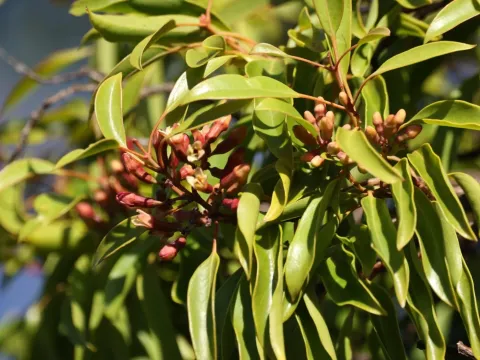
Sandalwood
Santalum
Sandalwood (Santalum) is a group of evergreen, hemiparasitic trees belonging to the Santalaceae family. The most economically significant species is Santalum album, highly valued for its fragrant heartwood.
What the section contains


Sandalwood
Cultivation begins in nurseries, where seeds are sown in pots alongside suitable host plants. Because sandalwood is hemiparasitic, it must establish a root connection with a host plant early on to survive and grow.
Selection of host plants is critical for success. Common hosts include species like Cajanus cajan or various legumes that provide the necessary nutrients and nitrogen to the sandalwood seedlings through root haustoria.
Seedlings are transplanted to their permanent locations once they are sufficiently hardy, typically after 6 to 12 months in the nursery. The timing must align with the onset of the rainy season for optimal establishment.
Planting spacing is vital to ensure adequate air circulation and sunlight exposure. Standard spacing usually ranges from 3 to 5 meters, allowing enough room for both the sandalwood tree and its associated hosts.
Sandalwood thrives in tropical climates with warm temperatures and distinct wet and dry seasons. It is typically found at altitudes between 600 and 1200 meters, where the climate remains relatively stable.
Well-drained soil is non-negotiable for sandalwood. It prefers sandy or rocky soils that prevent waterlogging. Heavy, clay-rich soils should be avoided, as they promote root rot and hinder proper nutrient uptake.
Sunlight is essential for the tree's health and the development of essential oils. While young trees benefit from light shade, mature trees require full sun to reach their maximum growth potential.
The chemical profile of the soil is less critical than the symbiotic relationship with the host plant. The sandalwood tree relies on these hosts to bypass its limited ability to absorb certain nutrients from the soil.
Water management is crucial. While mature trees are drought-tolerant, consistent moisture during the initial growth years significantly impacts the rate of heartwood development and overall tree health.
The most devastating disease affecting sandalwood is the 'spike disease', caused by phytoplasmas. It results in reduced leaf size, stunted growth, and the eventual death of the tree, with no effective chemical cure.
Pests such as heartwood borers and various caterpillars can cause significant structural and economic damage. Regular field monitoring is necessary to identify infestations before they become widespread across the plantation.
Root rot, driven by poor drainage or fungal pathogens, remains a primary cause of mortality. Improving soil aeration and choosing well-drained planting sites are the best preventive measures available.
Environmental stress, such as extreme heat or prolonged water deficiency, can weaken the trees, making them more susceptible to opportunistic diseases and pest attacks.
Management of the plantation should involve an integrated pest management (IPM) approach. This balances the use of biological controls to keep harmful insect populations in check without damaging the ecosystem.
Harvesting sandalwood is a long-term investment, as the tree requires 15 to 30 years to develop high-quality, oil-rich heartwood. Patience is a fundamental requirement in sandalwood farming.
The value of the harvest is determined by the concentration of santalol in the essential oil. The highest concentrations are typically found in the core of the trunk and the root system of mature specimens.
Harvesting involves cutting down the tree and carefully excavating the roots, as the roots are often the most valuable part due to their high oil content. The sapwood is removed, leaving only the dark heartwood.
The heartwood is then processed through chipping or grinding before undergoing steam distillation. This process requires precise temperature control to extract the aromatic oils without degrading their quality.
The final product serves diverse industries, including perfumery, luxury cosmetics, and religious incense production. Proper storage and quality testing are essential to maintain the high market value of the oil.